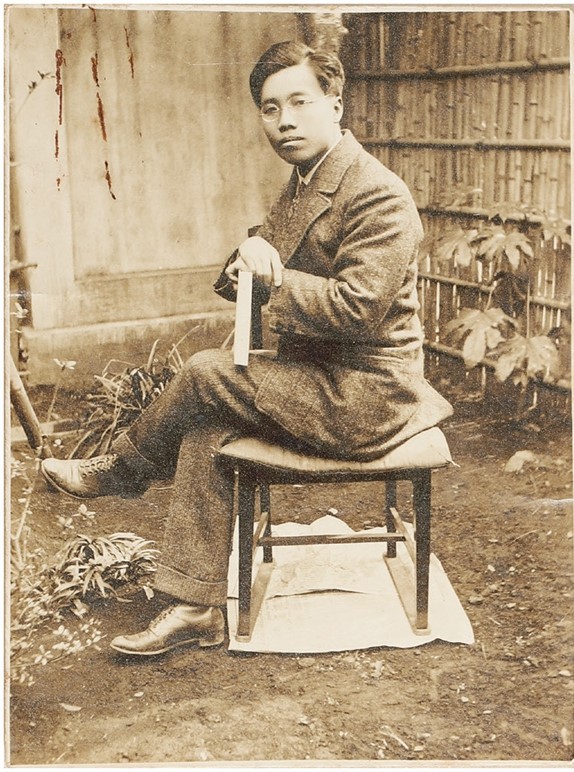
Né Zhang Xingyi 張星儀 le 24 mai 1893 à Meixian 梅縣, dans l’est du Guangdong, Zhang Ziping adopte vraisemblablement son nom littéraire durant ses années de formation au Japon, entre 1912 et 1921. Issu d’une région considérée comme l’un des foyers historiques de la culture hakka (kejia 客家), il grandit dans un milieu où l’éducation, la mobilité sociale et les traditions orales occupent une place importante. Sa famille bénéficie à l’origine d’une aisance relative, reposant à la fois sur le commerce de la soie et sur la possession de terres agricoles. Cette situation se détériore toutefois avec l’évolution du commerce maritime et le recul de l’économie rurale, qui provoquent un déclin progressif de la fortune familiale. Zhang Ziping est d’abord scolarisé à l’École sino-occidentale de Guangyi (Guangyi zhongxi xuetang 廣益中西學堂), établissement confessionnel chrétien, dont il critiquera plus tard l’hypocrisie morale dans plusieurs romans tels Shangdi de ernümen 上帝的兒女們 (Les Enfants de Dieu). En 1910, Zhang Ziping est admis à l’École supérieure de police des deux Guangdong (Liangguang gaodeng jingcha xuetang兩廣高等警察學堂), créée en 1908 dans le cadre des Nouvelles politiques (Xinzheng 新政), qui établissent des établissements équivalents dans chaque province sur le modèle du Japon. Cette période joue un rôle important dans sa formation littéraire qu’il développe à travers sa lecture de revues comme Dongfang zazhi 東方雜誌 et Xiaoshuo yuebao 小說月報. Zhang se passionne en particulier pour les récits sentimentaux, parmi lesquels Suiqin lou 碎琴樓 (le Pavillon du Luth brisé). Publié sous forme de feuilleton dans Dongfang zazhi à partir de 1910, ce roman de He Zou 何諏 (1884-1927) participe de la transition entre roman lettré et fiction sentimentale moderne. Comme beaucoup d’intellectuels de sa génération, Zhang lit également les traductions de Lin Shu 林紓 (1852-1924) comme La Dame aux camélias (Bali chahua nü yishi 巴黎茶花女遺事) et Joan Haste (Jiayin xiaozhuan 迦茵小傳), qui contribuent à son ouverture à la littérature occidentale et l’initient à une forme de narration à la première personne centrée sur l’expression intime des sentiments.
La Révolution de 1911 marque un tournant dans son parcours. Le gouvernement révolutionnaire du Guangdong attribue alors des bourses d’études au Japon à de jeunes gens pouvant faire état de leur participation à l’insurrection. Zhang Ziping parvient à bénéficier de ce dispositif en se forgeant, de toutes pièces, un passé révolutionnaire. Les études qu’il mène au Japon entre 1912 et 1921 lui permettent de rompre avec une trajectoire provinciale encore incertaine et d’intégrer les réseaux intellectuels qui façonneront son œuvre. Après une formation accélérée en japonais, il intègre en septembre 1914 la Première École supérieure de Tokyo (Daiichi kōtō gakkō 第一高等學校), classe préparatoire aux universités impériales. Il y rencontre deux condisciples de sa promotion, Yu Dafu 郁達夫 (1896-1945) et Guo Moruo 郭沫若 (1892-1978). En septembre 1918, il est admis à la faculté des sciences de l’Université impériale de Tokyo, où il se spécialise en géologie. Les neuf années qu’il passe au Japon sont décisives pour sa formation intellectuelle et littéraire. C’est à l’été 1918, lors d’un voyage avec Guo Moruo sur les rives de la baie de Hakata 博多 (Kyūshū), que les deux hommes évoquent pour la première fois le projet de fonder une revue littéraire. Durant cette période, Zhang Ziping rédige sa première nouvelle Yuetanhe zhi shui 約檀河之水 (Leseaux du Jourdain), achevée en juin 1920 après trois années de travail et sept ou huit versions successives. En juin 1921, Zhang cofonde à Tokyo la Société de la création (Chuangzao she 創造社) et sa revue éponyme aux côtés de Guo Moruo, Yu Dafu, Tian Han 田漢 (1898-1968) ou encore Cheng Fangwu 成仿吾 (1897-1984). La place de Zhang Ziping est résumée par l’écrivain et médecin Tao Jingsun 陶晶孫 (1898-1954) en une métaphore anatomique : « [Guo] Moruo est l’ossature de la Société de la création, je suis ses ligaments, [Zhang] Ziping sa chair et [Yu] Dafu sa peau », manière de dire que c’est Zhang qui représente la matière romanesque et narrative, donnant corps à l’ossature intellectuelle incarnée par Guo Moruo. Dans le sillage du Mouvement du 4-Mai, le groupe participe au renouvellement de la littérature chinoise moderne en privilégiant la langue vernaculaire (baihua 白話), l’expression subjective et l’expérimentation de formes narratives nouvelles, nourries par les littératures occidentales et japonaises. À son retour en Chine, Zhang épouse Xiong Shuqin 熊淑琴, la fille de l’ancien responsable des étudiants boursiers à l’ambassade de Chine au Japon, Xiong Sucun 熊素村, également originaire de Meixian.
En 1922, Zhang Ziping publie le roman semi-autobiographique Chongjiqi huashi 沖積期化石 (Fossiles de la période alluviale). Dans un paysage littéraire chinois encore largement dominé par la nouvelle et les textes courts, il est l’un des précurseurs du roman long (changpian xiaoshuo 長篇小說), qui devait s’imposer comme la forme reine du roman chinois moderne. Au sein de la Société de la création, Zhang Ziping défend une conception de la littérature fondée sur la subjectivité, l’expression individuelle et l’autonomie esthétique vis-à-vis des modèles occidentaux et japonais. Parallèlement à ces débuts remarqués en littérature, Zhang contribue également à développer la discipline à laquelle il a été formé en publiant, en mai 1922, un manuel de géologie et de minéralogie destiné à l’enseignement secondaire. À cette époque, Zhang Ziping semble encore vouloir faire de la géologie sa profession principale. Il obtient ainsi un poste de directeur dans une mine de plomb à Jiaoling 蕉嶺 (Guangdong), mais la faillite de la mine en 1924 l’amène à se tourner vers l’enseignement. Recruté par l’Université nationale de Wuchang (Guoli Wuchang daxue 國立武昌大學), il est d’abord rattaché au département de biologie, où il assure des cours de géographie physique et de géologie, avant d’être nommé au département de littérature chinoise. En mars 1928, à l’invitation de Cheng Fangwu, Zhang s’installe à Shanghai et rejoint le département éditorial de la Société de la création. En septembre de la même année, il fonde la Librairie du rassemblement joyeux (Lequn shudian 樂群書店) et lance la revue bimensuelle Lequn 樂群. Zhang compte alors parmi les écrivains les plus en vue de Shanghai. Il publie au total vingt-quatre romans, parmi lesquels Feixu 飛絮 (Ballottées par les vents, 1926) et Taili 苔莉 (Taili, 1927), ainsi que sept recueils de nouvelles tels que Meiling zhi chun 梅嶺之春 (Printemps dans les monts Mei, 1928). Plusieurs connaissent un grand succès commercial, avec de nombreuses rééditions. En 1930, Feixu en est déjà à sa onzième édition pour 23 000 exemplaires vendus. Les romans de Zhang répondent aux attentes d’un lectorat urbain avide de récits sentimentaux. Cette réussite attire toutefois les critiques, notamment de la part d’un autre romancier formé à la géologie : Lu Xun. Dans un essai intitulé « Zhang Ziping shi de “xiaoshuo xue” 張資平氏的「小說學」» (La “science romanesque” selon M. Zhang Ziping) paru en février 1930 dans le mensuel Mengya 萌芽 (Les Bourgeons), ce dernier résume l’œuvre de Zhang à un seul symbole : le triangle. Il fait référence aux intrigues amoureuses triangulaires (sanjiao lianxing xiaoshuo 三角戀愛小說), qui deviennent la marque de fabrique de Zhang. Cette formule lapidaire devait rester durablement attachée au nom de Zhang Ziping dans la critique littéraire de l’époque. Dans une analyse récente, Lu Hongzhen montre que le motif du triangle amoureux chez Zhang Ziping puise en partie dans la tradition des chants montagnards hakka de Meixian. La répétition, dans nombre de ses romans, du triptyque narratif « désir amoureux-liaison clandestine-séparation » reprend une représentation des rapports entre les sexes propre à cette culture dans laquelle a baigné Zhang. Toutefois, au tournant des années 1930, son goût pour les ménages à trois et son penchant pour un érotisme parfois scabreux valent à Zhang Ziping d’être violemment attaqué. Autre grand écrivain passé à la postérité, Shen Congwen 沈從文 (1902-1988) s’en prend ainsi à Zhang dans son essai « Lun Zhongguo chuangzuo xiaoshuo 論中國創作小說 » (Sur la création romanesque en Chine) publié en avril 1931 dans le mensuel Wenyi 文藝 (Lettres et arts). Il lui reproche d’avoir perverti la nouvelle « école de Shanghai » (Haipai 海派) : « C’est lui qui a brouillé les frontières de la littérature du haipai, qui a agi sur les tendances littéraires naissantes en les détournant des buts élevés vers lesquels elles se portaient avec enthousiasme, pour encourager un goût de bas étage, influençant ainsi les lecteurs et les auteurs » (cité dans Wu Fuhui 2000, p. 230).
Zhang Ziping assume sa réussite commerciale en faisant preuve d’un rapport décomplexé à l’argent. Dans un texte autobiographique intitulé Xie gei shei de xin 寫給誰的信 (À qui cette lettre est-elle destinée ? ), il écrit que « l’or est tout-puissant [黃金萬能] » chez les humains. Si on retrouve des propos similaires chez Lu Xun pour moquer l’hypocrisie des bien-pensants, la production littéraire de Zhang le place de manière croissante en porte-à-faux par rapport aux milieux littéraires chinois, notamment vis-à-vis des membres de la Société de la création. En effet, la conversion de Guo Moruo au marxisme voit celle-ci changer de ligne, loin de la défense du romantisme et de l’art pour l’art de ses débuts, au point d’être interdite par les autorités nationalistes en février 1929. L’essor de la littérature prolétarienne met à l’honneur des récits portant sur les rapports sociaux et la conscience de classe. Les romans sentimentaux, qui ont fait la renommée de Zhang, apparaissent de moins en moins légitimes. Ils lui valent d’être rangé dans la catégorie des écrivains « bourgeois » ou « marchandisés » (shangrenhua 商人化). Les histoires d’amour ne sont désormais acceptables qu’à condition d’être porteuses d’une transformation politique ou sociale. Zhang tente de s’adapter à cette nouvelle mode en adoptant un vocabulaire révolutionnaire. Cette conversion formelle ne lui gagne toutefois pas les faveurs des milieux de gauche et semble confirmer, aux yeux de la critique moderniste, le caractère superficiel de son œuvre. Sa marginalisation est illustrée par une affaire qui fait grand bruit dans les milieux littéraires au début de l’année 1933. En décembre 1932, Zhang est invité par Li Liewen 黎烈文 (1904-1972) à publier dans le supplément littéraire Ziyoutan 自由談 (Libres propos) du Shenbao 申報 connu pour avoir abrité les auteurs de l’école des Papillons et Canards mandarins (yuanyang hudie pai 鴛鴦蝴蝶派). Li souhaite alors rompre avec cette tradition des feuilletons sentimentaux. À partir du 1er décembre 1932, Zhang fait paraître Shidai yu ai de qilu 時代與愛的歧路 (Les Chemins divergents de l’époque et de l’amour). Cependant, en avril 1933, la rédaction interrompt brutalement le feuilleton « à la demande des lecteurs ». Cette décision provoque une vive polémique. Li Liewen est attaqué par le puissant tabloïd Jingbao 晶報 (The Crystal) qui lui reproche d’être contrôlé par les écrivains de gauche. De fait, le mépris dans lequel Zhang est tenu par ces derniers va croissant. Dans une lettre adressée le 15 mai 1934 à Yang Jiyun 楊霽雲 (1910-1996), Lu Xun va jusqu’à comparer Zhang à l’une des figures les plus honnies de l’histoire chinoise : « La différence entre Zhang Ziping et Lü Buwei, c’est que Zhang ne recherche que le profit là ou Lü recherchait la célébrité […] Zhang est d’une espèce encore plus basse » (cité dans Wu Fuhui 2000, p. 230). Zhang achève néanmoins le roman qu’il publie en novembre 1933, avant de le rééditer en décembre 1936 sous le titre Qingnian de ai 青年的愛 (Amours de jeunesse).
Passé de mode, Zhang Ziping voit sa situation matérielle se détériorer, tandis que la librairie Lequn ferme ses portes. Son nom devient un repoussoir, même lorsqu’il republie ses livres sous de nouveaux titres et en les signant Zhang Ping 張平. Il retrouve un emploi aux Presses commerciales de Shanghai (Shangwu yinshuguan 商務印書館), dont le directeur général Wang Yunwu 王雲五 (1888-1979) lui propose un poste de rédacteur d’ouvrages de géologie et de sciences naturelles. Zhang ne se retire pas pour autant du débat intellectuel. Son rejet par les milieux de gauche ne l’empêche pas de prendre comme eux position contre la politique jugée trop tiède des autorités nationalistes face à l’expansionnisme japonais. En juin 1933, il fonde avec Zeng Jinke 曾今可(1901-1972), Li Jinming 黎錦明 (1905-1999) ou encore Hu Huaichen 胡懷琛 (1886-1938) la Société de discussion sur les arts et les lettres (Wenyi zuotanhui 文藝座談會) et la revue Wenyi zuotan 文藝座談. Celle-ci sert de tribune à des attaques répétées contre la Ligue des écrivains de gauche (Zhongguo zuoyi zuojia lianmeng 中國左翼作家聯盟) et son plus célèbre représentant, Lu Xun. Zhang diffuse la rumeur selon laquelle ce dernier aurait reçu 10 000 yuans du libraire Uchiyama Kanzō 内山完造 (1885-1959), accusé d’être un espion japonais. En juillet 1933, Zhang publie deux articles importants qui dénoncent à la fois l’impérialisme japonais et la naïveté de la gauche chinoise. Dans « Cong zaoshang dao xiawu 從早上到下午 » (Du matin au soir), Zhang conteste la possibilité d’une alliance prolétarienne sino-japonaise, en affirmant que les ouvriers et paysans japonais sont déjà acquis au nationalisme impérialiste. Dans « Zuoye Xue shi youqing 佐野學氏右傾 » (Le virage à droite de M. Sano Manabu), il répond au portrait que fait Chen Binhe du dirigeant communiste japonais Sano Manabu 佐野學 (1892-1953) en internationaliste. Zhang soutient au contraire que Sano s’est rallié au nationalisme japonais. Ces prises de position lui valent d’être identifié par les autorités de l’Archipel comme un propagandiste hostile au Japon. En octobre et novembre 1933, Fujinuma Shōhei 藤沼庄平 (1883-1962), alors inspecteur général de la police métropolitaine japonaise de Tokyo, envoie deux circulaires confidentielles signalant ces textes et ordonnant leur traduction à des fins de surveillance politique.
Chassé des bureaux des Presses commerciales par les bombardements qui débutent en août 1937, Zhang se réfugie à l’ouest de la ville. En mars 1938, lors de la constitution du Gouvernement réformé (Weixin zhengfu 維新政府) à Nankin, Liang Hongzhi et Chen Qun tentent en vain de le recruter comme ministre de l’Éducation en usant de la carotte et du bâton. Des émissaires sont envoyés chez lui pour tenter de le convaincre, tandis que la police militaire japonaise (Kenpeitai 憲兵隊) lui rend également visite au sujet de ses écrits antijaponais. En juillet 1938, le Comité spécial pour la Chine (Taishi tokubetsu iinkai 對支特別委員會) de Doihara Kenji l’identifie encore comme l’un des « talents » susceptibles d’être recrutés dans le futur gouvernement central. Dès mai 1938, Zhang s’est toutefois enfui à Hong Kong afin d’échapper à ces pressions. Le mois suivant, il accepte la proposition du président de l’Université du Guangxi, Bai Pengfei 白鵬飛 (1889-1948), de s’installer à Wuzhou 梧州 pour prendre la tête du Département de géologie et des ressources minières. Rejoignant l’arrière-pays où se sont réfugiés de nombreux étudiants venus de l’Est, Zhang débute ses enseignements en octobre 1938 dans des conditions difficiles. En effet, les cours ne peuvent se tenir que l’après-midi, les matinées étant passées dans les abris antiaériens. Après la chute de Canton, à la fin du mois d’octobre 1938, l’Université du Guangxi décide de se replier à Guilin. Zhang demande alors un congé d’un mois pour retourner à Shanghai chercher sa famille. Il quitte Wuzhou le 27 octobre, passe par Nanning, Longzhou et Zhennanguan et l’Indochine française avant d’arriver à Hong Kong le 20 novembre.
C’est lors de ce séjour hongkongais que son destin bascule. Dans un contexte d’isolement croissant et de pressions japonaises, Zhang Ziping accepte le soutien financier du consul général Nakamura Toyoichi 中村豊一 (1895-1971), qui a oeuvré dans les mois précédents pour le compte du ministre des Affaires étrangères Ugaki Kazushige dans des discussions secrètes avec les émissaires de Kong Xiangxi 孔祥熙 (1880-1967). Zhang s’embarque pour Shanghai le 27 novembre 1938. Il reçoit peu après sa lettre de licenciement de l’Université du Guangxi. Installé à Shanghai, il publie deux communiqués dans le Shenbao et le Xinwenbao 新聞報 afin de démentir les rumeurs de collaboration qui circulent à son sujet. Il mandate également un avocat pour défendre son honneur. Pourtant, à l’invitation de Yuan Shu, il finit par accepter de participer aux activités du Mouvement pour l’essor de l’Asie et la reconstruction nationale (Xingya jianguo yundong 興亞建國運動) fondé en septembre 1939 à l’initiative d’Iwai Eiichi. Sous le pseudonyme de Zhang Xinghai 張星海, il préside le Comité pour la culture (Wenhua weiyuanhui 文化委員會) au sein des instances centrales de l’organisation. Formé le 21 novembre 1939, ce comité se donne pour mission de promouvoir la culture est-asiatique, notamment à destination de la jeunesse, de diffuser le savoir scientifique et d’endiguer l’idéologie communiste. Il pilote plusieurs organisations telles que la Société de recherche sur les arts (Yixue yanjiushe 藝學研究社), la Société chinoise de science juridique (Zhongguo falüxueshe 中國法律學社), l’Association de journalisme (Xinwenxuehui 新聞學會) ou encore la Société des livres sur les belles lettres et la science (Wenli tushu gongsi 文理圖書公司). Il publie également le mensuel Xinwenyuan 新聞苑 qui se présente comme « une revue consacrée à la pure littérature et aux chroniques artistiques », mais qui sert surtout de support aux slogans du Mouvement pour l’essor de l’Asie et la reconstruction nationale. Zhang ne semble pas au courant du statut d’agents doubles communistes de plusieurs figures du mouvement comme Yuan Shu et Chen Fumu. Son implication dans les milieux collaborateurs de Shanghai passe également par la revue Xin kexue, 新科學 (Nouvelle science), qu’il fonde en mai 1939 sous le pseudonyme de Zhang Sheng 張聲. Cette revue est semble-t-il financée par les autorités d’occupation par l’intermédiaire de Fu Shiyue. Fidèle à sa double casquette d’ingénieur et de romancier, Zhang rejoint également, en octobre 1938, la revue Wenxue yanjiu 文學研究 (Recherches littéraires).
En février 1940, Zhang Ziping cosigne avec d’autres dirigeants du Mouvement pour l’essor de l’Asie et la reconstruction nationale une déclaration adressée à Wang Jingwei, dans laquelle ils expriment leur allégeance et leur soutien au Gouvernement national réorganisé qui voit le jour le 30 mars. Peu après le « retour à la capitale », Zhang est frappé par un deuil personnel : sa cinquième fille, Yanduan 燕端, née en août 1936, meurt le 1er mai 1940 d’une hémorragie gastrique soudaine. Zhang lui consacre un long texte intitulé « Xin de chuangshang, ku Yan’er 新的創傷 ; 哭燕兒 » (Nouvelle blessure, pleurer Yan’er), paru en septembre 1940 dans le Huawen Daban meiri 華文大阪每日, magazine en chinois diffusé en zone occupée par le groupe Mainichi connu pour sa relative liberté de ton. Le deuil paternel s’accompagne d’une nostalgie pour le pays perdu et d’une honte de la collaboration à peine voilée. Zhang affirme que « dernièrement, [il s’est] souvent comporté de manière forcée et peu naturelle, et a tenu des propos qui ne venaient pas du cœur » et dit adopter « la doctrine du faire-semblant-de-ne-pas-comprendre [難得糊塗主義] ». De fait, en dépit de sa célébrité, Zhang Ziping n’occupe aucune position importante dans le nouveau gouvernement. Dans une lettre envoyée à Hu Shi 胡適 (1891-1962) en 1948, il décrit les pressions qu’il subit alors pour collaborer plus ouvertement : « Ils ont cherché à m’appâter avec un poste de président d’université, avant de vouloir me séduire avec une charge de vice-ministre. J’ai répondu que je souhaitais me consacrer à la géologie et ne voulais pas occuper un poste officiel. Sans mon autorisation, ils ont alors annoncé que j’étais nommé fonctionnaire au ministère de l’Agriculture et des Mines [Nongkuangbu jianren jizheng 農礦部簡任技正] […], mais je n’ai jamais rien signé. Je suis juste allé une fois à Nankin pour emprunter de l’argent à un ami afin de survivre et pour faire annuler ma nomination comme fonctionnaire, mais ça m’a été refusé. » (cité dans Zeng Xiangjin , p. 47). En réalité, Zhang occupe ce poste pendant quatre ans, et participe à d’autres organismes directement liés au régime de Nankin.
C’est notamment le cas de l’Association culturelle sino-japonaise (Zhong-Ri wenhua xiehui, 中日文化協會), fondée le 28 juillet 1940 sous la direction de Chu Minyi. Financée majoritairement par des fonds japonais, notamment ceux de l’ambassade du Japon et du Kōa-in 興亜院, elle sert officiellement au rapprochement culturel sino-japonais, mais vise à encadrer la production intellectuelle et artistique pour la mettre au service de la propagande du régime. Zhang siège comme membre suppléant du conseil d’administration de l’association et dirige son groupe éditorial, tout en étant rédacteur en chef de son organe Zhongri wenhua 中日文化. Début 1942, Zhang est également nommé chercheur au sein du Comité de préservation du patrimoine culturel (Wenwu baoguan weiyuanhui 文物保管委員會) qui dépend du Yuan exécutif (Xingzhengyuan 行政院). Il y inventorie les collections géologiques de l’Academia Sinica (Zhongyang yanjiuyuan 中央研究院) et de l’Institut central de recherches géologiques (Zhongyang dizhi diaochasuo 中央地質調查所). Dans sa lettre de 1948 à Hu Shi, Zhang explique avoir obtenu d’occuper ce poste peu exposé grâce au soutien du malacologiste Taki Isao 瀧庸 (1898-1961), nommé par le Kōa-in à la tête du Bureau de recherche du Comité de préservation du patrimoine culturel. Zhang Ziping est pressenti avec Zhou Zuoren pour représenter le gouvernement de Nankin au premier Congrès des écrivains de la Grande Asie orientale (Da dongya wenxuezhe dahui 大東亞文學者大會) organisé à Tokyo en novembre 1942. Selon son témoignage, il se montre d’abord intéressé avant de changer d’avis en prenant connaissance de la composition de la délégation chinoise. Beaucoup sont des Cantonais ne parlant pas le japonais, parmi lesquels « trop de membres du gouvernement », ce qui lui fait craindre de devoir jouer les interprètes. Pour le remplacer, il recommande deux membres de la Société de la création : Gong Chiping 龔持平 (1908-1955), dit Binglu 冰廬, et Zhou Yuying 周毓英 (1900-1945).
Comme rédacteur en chef de Zhongri wenhua, Zhang Ziping adopte une ligne éditoriale ambivalente. La revue publie des textes inscrits dans la rhétorique officielle du régime, mais accueille aussi plusieurs articles dans lesquels Zhang critique la politique culturelle japonaise en Chine. Il dénonce le mépris de certains Japonais pour les populations rurales chinoises et reproche au Japon de n’envoyer en Chine que des intellectuels de second ordre. Ces prises de position irritent les autorités japonaises, qui envoient régulièrement la police militaire l’interroger. Zhang démissionne de ses fonctions le 25 février 1942. Il est remplacé par Gao Qixian 高齊賢 à la tête de la rédaction. Cette attitude critique ne l’empêche toutefois pas de devenir l’un des théoriciens du virage fasciste que prend le gouvernement de Wang Jingwei au cours de l’année 1942, marquée par le lancement du Mouvement des nouveaux citoyens (Xin guomin yundong 新國民運動) et, plus largement, par un embrigadement idéologique en vue de l’entrée en guerre aux côtés du Japon fondé sur le slogan « Un pays, un parti, un leader, une doctrine ». À rebours des promesses de pluralisme politique dans le cadre d’une démocratie constitutionnelle qui accompagnent le « retour à la capitale » en 1940, plusieurs intellectuels comme Yuan Shu et Zhang Ziping développent alors le concept de « holisme » (quanti zhuyi 全體主義). Celui-ci repose sur une définition organique et totalisante de la société, qui rejette à la fois l’individualisme occidental et le socialisme soviétique. Cette notion s’inspire notamment des travaux de l’Autrichien Othmar Spann (1878-1950), déjà à l’origine de son équivalent japonais, le zentai shugi 全体主義, apparu dans les années 1930 et qui sert de base philosophique au « Mouvement pour une nouvelle structure » (Shin taisei undō 新体制運動) lancé par Konoe Fumimaro en 1940.
Cette participation active à la propagande pro-japonaise n’empêche pas le débat. En novembre 1942, Zhang Ziping participe ainsi à un dossier de la revue Dayazhou zhuyi yu Dongya lianmeng 大亞洲主義與東亞聯盟 (Panasiatisme et Ligue est-asiatique) aux côtés de deux fonctionnaires du ministère de la Propagande, Huang Pusheng 黃菩生 et Hu Yingzhou 胡瀛洲. Leurs articles apportent une réponse critique à un essai du philosophe Kōyama Iwao 高山岩男 (1905-1993) paru le mois précédent dans la revue japonaise de premier plan Chūō kōron 中央公論. Dans cet article intitulé « Rekishi no suishinryoku to dōgi-teki seimeiryoku 歴史の推進力と道義的生命力 » (La force motrice de l’histoire et l’énergie morale), Kōyama établit une hiérarchie entre les nations selon leur « énergie morale » (moralische Energie), un concept emprunté à Leopold von Ranke (1795-1886) qui désigne la force d’une nation à influer sur le cours de l’Histoire, notamment en s’imposant par la guerre. Ce critère, plutôt qu’une hiérarchie raciale fondée sur le sang, justifie selon Kōyama le rôle dirigeant du Japon en Asie orientale et sa responsabilité démiurgique dans l’édification d’un nouvel ordre mondial. Disciple de Nishida Kitarō 西田幾多郎 (1870-1945), Kōyama est l’un des principaux représentants de l’École de Kyōto (Kyōto gakuha 京都学派). Son article est publié dans le cadre de trois colloques organisés par la revue Chūō kōron ouverts par un débat sur « Le point de vue de l’histoire mondiale et le Japon » (Sekaishiteki tachiba to Nihon 世界史的立場と日本) qui se tient le 26 novembre 1941 et donne lieu à une série de publications au cours de l’année suivante. Son objet est de renverser au profit du Japon la Weltgeschichte jugée eurocentrique. Avec le colloque sur « Dépassement de la modernité » (Kindai no chōkoku 近代の超克) qui se tient en juillet 1942, il marque l’apogée du nationalisme intellectuel japonais, qui vaudra aux participants de ces colloques d’être inquiétés après 1945 pour avoir contribué à l’idéologie expansionniste nipponne. Dans son article intitulé « Daoyi de shengmingli zhi rongliang ji hanshu – da Gaoshan Yannan jun 道義的生命力之容量及函數 – 答高山岩男君 » (Capacité et fonction de l’énergie morale – réponse à M. Kōyama Iwao), Zhang Ziping réfute la thèse de Kōyama selon laquelle la nation Han aurait perdu son énergie morale, qu’il met sur le compte d’une méconnaissance de l’histoire de la Chine moderne. En acceptant de collaborer avec l’envahisseur, affirme-t-il, Wang Jingwei incarne une « énergie morale magnanime [dacheng de daoyi shengmingli 大乘的道義生命力] » mise au service du salut de la Chine et de l’Asie orientale, comme le fait Pétain pour sauver la France et l’Europe. Dans un cas comme dans l’autre, il s’agit donc de revendiquer un rôle actif dans la construction du nouvel ordre mondial pour ces grandes puissances déchues. Beau joueur, Kōyama répond à ce dossier critique en reconnaissant certaines erreurs de sa part.
Parallèlement à cette production idéologique, Zhang Ziping continue à publier de la littérature, quoique liée par ses thèmes à la propagande du régime. Entre juin et septembre 1942, il fait paraître dans le Zhongbao 中報, quotidien édité par Luo Junqiang, le roman-feuilleton Yanbo jiangshang 煙波江上 (Brumes sur le fleuve), consacré à la désillusion des révolutionnaires à Wuhan en 1927. En août 1943, il publie dans le Minguo ribao 民國日報 le roman-feuilleton Qinglinxie青燐屑 (Cendres phosphorescentes) destiné à promouvoir le Mouvement pour la paix. Le texte s’attaque aux dirigeants du PCC, alors que Mao Zedong avait pris pour cible Zhang lors du Forum de Yan’an sur la littérature et l’art en mai 1942. À cette occasion, Mao érige Zhang Ziping et Zhou Zuoren en étendards de la « littérature des traîtres aux Han [漢奸文藝] ». En dépit de ces bonnes intentions, le roman est interrompu sur ordre de Wang Jingwei. Cette nouvelle « décapitation » de l’une de ses œuvres aurait été motivée par deux éléments : le nom d’un personnage, dont la sonorité rappelait celui de Wang Jingwei, et l’évocation de la flambée des prix. La position de Zhang Ziping est, par ailleurs, fragilisée par un scandale de mœurs. Son épouse n’ayant pas souhaité le suivre à Nankin, Zhang réside seul dans la capitale. Alors âgé de 48 ans, il entame une liaison avec Liu Minjun 劉敏君. Jeune employée de vingt-quatre ans, rencontrée au ministère des Mines et de l’Agriculture, Liu est surnommée « Petit vase » (Xiao huaping 小花瓶) par ses collègues. Caressant des ambitions littéraires, elle se rapproche de Zhang Ziping, qu’elle admire. Très épris de la jeune fille, Zhang rebaptise l’appartement qu’il loue à Nankin le « Cabinet au vase » (pingzhai 瓶齋). Le scandale éclate lorsque le Jingbao 京報, quotidien lié à Zhou Fohai, publie un feuilleton intitulé Xiao huaping chuanqi小花瓶傳奇 (La Légende du Petit Vase) qui relate avec force détails la liaison et la cohabitation des deux amants. L’affaire est aussitôt reprise dans la presse de Shanghai et de Nankin. Très irrité, Zhang tente de se défendre par la fiction en publiant dans Zhongri wenhua le roman Zheliu 折柳 (Saules brisés), qui présente cette relation comme un amour légitime. Il écrit ensuite Xin hong A zi 新紅A字 (Nouvelle Lettre écarlate A), son dernier roman, dont le titre renvoie explicitement à The Scarlet Letter (1850) de Nathaniel Hawthorne (1804-1864). Zhang s’y met en scène comme la victime et affirme que « certains ont voulu réprimer notre union par la violence ». Face au scandale, il quitte la capitale en janvier 1944 pour retourner à Shanghai avec Liu Minjun et leur fille.
Zhang entame une nouvelle traversée du désert. Il continue à fréquenter Tao Jingsun, ancien membre de la Société de la création qui dirige alors l’Institut de traduction de la culture orientale (Dongfang wenhua bianyiguan 東方文化編譯館), tout en œuvrant en secret pour l’espion communiste Pan Hannian 潘漢年 (1905-1977). L’écrivain japonais Takeda Taijun 武田泰淳 (1912-1976), qui travaille pendant la guerre pour les services culturels de l’armée japonaise, croise Zhang en juin 1944 à l’Institut de traduction. Il écrit que Zhang est déjà « oublié au Japon comme en Chine, méprisé dans le camp de la résistance et négligé en zone occupée » (cité dans Sugino 2004, p. 273). Pour nourrir sa famille nombreuse, Zhang obtient grâce à Tao de siéger à partir de janvier 1945 dans un comité réunissant des personnalités sino-japonaises des arts et des lettres. À en croire sa principale biographie (E Jirui et al. 1991, p. 60), Zhang Ziping aurait, par dépit vis-à-vis du gouvernement de Nankin, comploté en faveur d’un changement de régime. Son principal associé dans cette entreprise avortée par la défaite serait un certain Shima Eizō 島英三, avec lequel il aurait formé une organisation appelée Dongtianhong 東天紅 (Aube orientale), plus tard rebaptisée Huangshe 黃社 (Société jaune), sans que les auteurs précisent si celle-ci a un quelconque lien avec le Département de recherche du Tōtenkō (Tōtenkō chōsabu 東天紅調査部), dont le nom évoque à la fois l’ « éveil de l’Asie » et une race de coq devenue un symbole national au Japon. On ne connaît de ce mystérieux organisme qu’un seul long rapport secret non daté, intitulé Kokusai supai sen no zenbō 国際スパイ戦ノ全貌 (Tableau général de la guerre internationale des espions), dans lequel sont présentées les différentes agences de renseignement à travers le monde.
Après la défaite du Japon en août 1945, Zhang Ziping échappe dans un premier temps à l’épuration. Il survit en réalisant des traductions et en rédigeant des articles sur la situation économique en Asie du Sud-Est pour le compte de l’entreprise de textile Damao (Damao fangzhi gongsi 大茂紡織公司). À l’automne 1946, il se fait recommander par des proches auprès de Shen Lixing 沈立行 (1922-?), qui accepte de publier dans le journal shanghaïen Dazhong yebao 大眾夜報 deux textes de souvenirs sur les débuts de la Société de la création : « Taidongqi de Chuangzao she 胎動期的創造社 » (La gestation de la Société de la création) et « Chuangzao jikan shidai 創造季刊時代 » (L’époque de la Revue trimestrielle de la Création). Ces textes, riches en informations sur l’histoire interne du groupe, augmentent d’abord le tirage du journal. Mais la rédaction reçoit bientôt de nombreuses lettres de lecteurs protestant contre la parution des écrits d’un « traître ». Zhang adopte alors le pseudonyme Zhang Bingsheng 張秉聲 et publie, dans le même journal, un roman historique en feuilleton, Raoxian fengyu 繞弦風雨 (Destins emmêlés face aux épreuves), mais il est interrompu après trois mois sur décision de la rédaction. Le 20 mars 1948, le Bureau du GMD à Shanghai (Guomindang Shanghai shi dangbu 國民黨上海市黨部) porte plainte contre Zhang Ziping pour crime de collaboration. Le même jour, Zhang adresse une lettre à Hu Shi, alors président de l’Université de Pékin, accompagnée d’un mémoire intitulé « Wo zhi bianming 我之辨明 » (Ma justification), dans lequel il soutient qu’il a été nommé dans le gouvernement de Wang Jingwei malgré lui. Dans une seconde lettre à Hu Shi, Zhang lui demande d’intercéder auprès de Chen Lifu 陳立夫 (1900-2001), qui est déjà intervenu pour certains collaborateurs, afin de faire classer l’affaire. Hu Shi ne lui répond pas. En avril 1948, Zhang est condamné à un an et trois mois d’emprisonnement. Il fait appel, mais le jugement est confirmé en août 1948. En janvier 1949, le Tribunal spécial (Tezhong xingshi fating 特種刑事法庭) annule toutefois le jugement et ordonne à la Haute Cour (Gaodeng fayuan 高等法院) de Shanghai de rejuger l’affaire.
À sa sortie de prison, Zhang Ziping est seul et sans ressources à Shanghai. Il trouve refuge dans une petite chambre d’entresol que lui prête Huang Suzhen 黃素貞 (1904-1984), veuve de Liu Na’ou 劉吶鷗 (1905-1940), romancier taïwanais assassiné en 1940 par le Juntong 軍統 en raison de sa participation au gouvernement de Wang Jingwei. Face au manque d’hygiène de Zhang, Huang lui demande de partir, ce qu’il refuse de faire. Le litige est porté devant les tribunaux où Huang est défendue par l’avocat Zhou Li’an 周黎庵 (1916-2003), qui décrit Zhang comme « un type râblé, noiraud et gros ». Zhang reconnaît ses torts et promet de déménager. Après la prise de Shanghai par les communistes en mai 1949, Zhang cherche à s’entendre avec les nouvelles autorités en sollicitant, en juin, l’appui du maire adjoint de la ville, Pan Hannian, afin d’obtenir un emploi. Les sources ne permettent pas d’établir si Zhang a travaillé pour le compte des réseaux de renseignements communistes établis par Pan en zone occupée pendant la guerre. Sa proximité avec Yuan Shu et Tao Jingsun, tous deux agents doubles œuvrant pour le compte de Pan, pourrait cependant expliquer le lien entre les deux hommes, qu’il ait ou non servi les intérêts du PCC. Pan transmet sa demande aux autorités de Changning (Shanghai). Celles-ci proposent un poste d’enseignant de collège à Zhang qui refuse. Il contacte également Guo Moruo, son vieux camarade devenu entre-temps un dignitaire du nouveau régime communiste. Guo relaie également sa requête sans résultat. Début 1950, Zhang postule, sous le pseudonyme Zhang Sheng 張聲, à une campagne de recrutement de professeurs organisée par les autorités du Nord-Est à Shanghai. Admis à l’écrit, il est écarté lorsque sa véritable identité est connue. Il subsiste alors en publiant, sous le pseudonyme Bingsheng 秉聲, des feuilletons comme Zeng Titou 曾剃頭, roman historique consacré à Zeng Guofan, dans le Yibao 亦報. Ce quotidien, où Zhou Zuoren publie également à la même époque, est dirigé par Tang Dalang 唐大郎 (1908-1980), un ancien du journal collaborateur Haibao 海報 fondé par Jin Xiongbai. À la demande de Tang Dalang, Zhang publie pas moins de 908 textes brefs sous différents pseudonymes (Shenshou 申壽, Hesheng 鶴生, Shishan 十山, Zhuyou 祝由). Shen Lixing, qui le croise à l’époque lors de réunions à la rédaction du Yibao, le découvre « en haillons, noiraud et amaigri ».
En 1952, Zhang écrit à Zhou Enlai 周恩來 (1898-1976) pour lui demander un travail. Il est autorisé à passer un examen pour devenir enseignant qu’il réussit, mais doit renoncer à poursuivre en raison de son hypertension. Il s’adresse alors à Liu Shaoqi 劉少奇 (1898-1969) et reçoit une réponse du Bureau de la culture et de l’éducation du Conseil administratif du gouvernement populaire central (Zhengwuyuan wenjiao bangongting 中央人民政府政務院文教辦公廳), qui lui demande de traduire des ouvrages sur les gisements de minerais et la métallurgie sous la direction de Yuan Hanqing 袁翰青 (1905-1994), spécialiste de chimie travaillant comme éditeur en chef pour les Presses commerciales. En septembre 1953, Zhang obtient finalement un poste comme enseignant de géographie dans un lycée de Shanghai, vraisemblablement grâce à l’entremise de Pan Hannian. Jugeant ce poste insuffisant, il tente d’être nommé à l’Université normale de la Chine de l’Est (Huadong shifan daxue 華東師範大學), mais essuie un refus. Le 8 juin 1955, Zhang Ziping est arrêté comme contre-révolutionnaire sur ordre du Parquet populaire de Shanghai (Shanghaishi renmin jianchayuan 上海市人民檢察院), à la veille du lancement de la campagne de répression des contre-révolutionnaires (sufan yundong 肅反運動). Les sources ne disent pas si cette arrestation a un lien avec l’« affaire Pan Hannian » qui éclate plus tôt dans l’année et affecte d’autres proches de Zhang comme Yuan Shu. L’épouse de Zhang demande le divorce l’année suivante. Le 2 septembre 1958, le Tribunal populaire intermédiaire de Shanghai (Shanghaishi zhongdeng renmin fayuan 上海市中等人民法院) le condamne à vingt ans d’emprisonnement pour ses fonctions au sein du régime de Wang Jingwei, la rédaction d’articles réactionnaires promouvant les idéologies fascistes japonaise et allemande, ou encore la publication de romans nuisibles à la jeunesse. En 1959, il est transféré dans un camp de travail à Baimaoling 白茅嶺, dans l’Anhui. Il meurt seul le 2 décembre 1959, à l’âge de soixante-six ans. Ses funérailles sont prises en charge par l’administration.
Zhang Ziping n’a pas bénéficié, ces dernières décennies, du retour en grâce qu’ont connu d’autres figures de la scène littéraire shanghaïenne des années 1930-1940 impliquées, à des degrés divers, dans la collaboration, telles que Mu Shiying, Liu Na’ou et surtout Zhang Ailing 張愛玲 (1920-1995). Cette différence de traitement tient sans doute au dédain que continue de susciter une œuvre littéraire dont les qualités sont jugées insuffisantes pour compenser la compromission de Zhang sous l’occupation. Quelques travaux refusent néanmoins de réduire cette œuvre au jugement expéditif porté sur elle par Lu Xun et Shen Congwen, en soulignant la place charnière occupée par Zhang dans l’histoire du roman chinois moderne.
Sources : Tsai TingShan 2015, p. 169-181 ; Chang Yung-chiu 2020, p. 81-98 ; E Jirui et al. 1991 ; Yan Min 1999 ; Zhao Qiang 2006 ; Chen Zishan 2016 ; Zhou Yi 2011 ; Keaveney 2009, p. 31 ; Lai Lili 2016 ; Lu Hongzhen 2008, p. 1-14, 27 ; Xu Zhongjia 2021 ; Wu Fuhui 2000 ; Zeng Xiaolan 2025, p. 52-53 ; Hockx 2011, p. 216-217 ; Kato 2013, p. 101-102 ; Sugino 2010 ; Xu Zhongjia 2024 ; Seki 2019, p. 243, 348-362 ; Williams 2014 ; Calichman 2008 ; Zeng Xiangjin 2023 ; Xu Zhongjia 2024 ; Taylor 2020, p. 45-46 ; Sugino 2004 ; Li Zhaozhong 2016, p. 41 ; WKS, vol. 3, p. 1199-1200.
Notice rédigée par Armande Baret (étudiante de master à l’Inalco), éditée et complétée par David Serfass.
Born Zhang Xingyi 張星儀 on 24 May 1893 in Meixian 梅縣, in eastern Guangdong, Zhang Ziping probably took his literary name while studying in Japan between 1912 and 1921. His home region is regarded as one of the historic heartlands of Hakka (kejia 客家) culture, and he grew up in a milieu where education, social mobility, and oral traditions mattered a great deal. His family was at first fairly well off, with an income drawn from the silk trade and from farmland. Its position worsened, however, as maritime trade changed and the rural economy declined, and the family fortune slowly dwindled. Zhang Ziping first attended the Guangyi Sino-Western School (Guangyi zhongxi xuetang 廣益中西學堂), a Christian mission school. He would later attack its moral hypocrisy in several novels, among them Shangdi de ernümen 上帝的兒女們 (Children of God). In 1910 Zhang Ziping entered the Liangguang Higher Police Academy (Liangguang gaodeng jingcha xuetang 兩廣高等警察學堂). The academy was founded in 1908 under the New Policies (Xinzheng 新政), which set up similar institutions in every province on the Japanese model. These years were important for his literary development, which he pursued by reading periodicals such as Dongfang zazhi 東方雜誌 and Xiaoshuo yuebao 小說月報. Zhang was especially drawn to sentimental fiction, including Suiqin lou 碎琴樓 (The Pavilion of the Broken Lute). Serialized in Dongfang zazhi from 1910 onward, this novel by He Zou 何諏 (1884-1927) belongs to the transition from the literati novel to modern sentimental fiction. Like many intellectuals of his generation, Zhang also read Lin Shu’s 林紓 (1852-1924) translations, such as La Dame aux camélias (Bali chahua nü yishi 巴黎茶花女遺事) and Joan Haste (Jiayin xiaozhuan 迦茵小傳). These translations opened his eyes to Western literature and introduced him to first-person narration focused on the private expression of emotion.
The 1911 Revolution proved a watershed in Zhang Ziping’s life. At this juncture, the revolutionary government of Guangdong was awarding scholarships for study in Japan to young men able to attest to their participation in the uprising. Zhang secured one of these awards by fabricating an entirely fictitious revolutionary past. His studies in Japan from 1912 to 1921 let him escape a provincial career whose prospects were still uncertain and gave him access to the intellectual networks that would shape his work. After a crash course in Japanese, he entered the First Higher School in Tokyo (Daiichi kōtō gakkō 第一高等學校), a preparatory school for the imperial universities, in September 1914. There he met two classmates from his year, Yu Dafu 郁達夫 (1896-1945) and Guo Moruo 郭沫若 (1892-1978). In September 1918 he entered the Faculty of Science at Tokyo Imperial University, where he majored in geology. His nine years in Japan were decisive for his intellectual and literary development. In the summer of 1918, during a trip with Guo Moruo to the shores of Hakata 博多 Bay in Kyūshū, the two men first discussed founding a literary journal. During this period Zhang Ziping wrote his first story, Yuetanhe zhi shui 約檀河之水 (The Waters of the Jordan), which he finished in June 1920 after three years of work and seven or eight drafts. In June 1921 in Tokyo, Zhang co-founded the Creation Society (Chuangzao she 創造社) and its journal of the same name with Guo Moruo, Yu Dafu, Tian Han 田漢 (1898-1968), and Cheng Fangwu 成仿吾 (1897-1984), among others. The writer and physician Tao Jingsun 陶晶孫 (1898-1954) summed up Zhang Ziping’s place in the group with an anatomical metaphor: “[Guo] Moruo is the skeleton of the Creation Society, I am its ligaments, [Zhang] Ziping its flesh, and [Yu] Dafu its skin.” In other words, Zhang supplied the fictional and narrative substance that fleshed out the intellectual framework Guo Moruo embodied. In the wake of the May Fourth Movement, the group helped renew modern Chinese literature. It favored the vernacular language (baihua 白話) and subjective expression, and it experimented with new narrative forms drawn from Western and Japanese literature. On his return to China, Zhang married Xiong Shuqin 熊淑琴. She was the daughter of Xiong Sucun 熊素村, a fellow native of Meixian who had once been in charge of Chinese government-funded students at the Chinese legation in Japan.
In 1922 Zhang Ziping published the semi-autobiographical novel Chongjiqi huashi 沖積期化石 (Fossils of the Alluvial Period). At a time when Chinese letters were still dominated by the short story and other brief forms, he was one of the pioneers of the full-length novel (changpian xiaoshuo 長篇小說). This form would go on to become the preeminent genre of modern Chinese fiction. Within the Creation Society, Zhang Ziping championed a conception of literature grounded in subjectivity, individual expression, and aesthetic autonomy from Western and Japanese models. Alongside this much-noticed literary debut, Zhang also contributed to the discipline in which he had been trained. In May 1922 he published a textbook of geology and mineralogy for secondary schools. At this stage Zhang Ziping still seems to have intended to make geology his main profession. He accordingly took up a post as director of a lead mine in Jiaoling 蕉嶺 (Guangdong). When the mine went bankrupt in 1924, however, he turned to teaching. He was hired by National Wuchang University (Guoli Wuchang daxue 國立武昌大學), where he was first attached to the Department of Biology and taught physical geography and geology. He was subsequently appointed to the Department of Chinese Literature. In March 1928, at Cheng Fangwu’s invitation, Zhang moved to Shanghai to join the editorial department of the Creation Society. In September of that year he founded the Joyful Gathering Bookstore (Lequn shudian 樂群書店) and launched the semimonthly journal Lequn 樂群. By then Zhang ranked among the most prominent writers in Shanghai. In all, he published twenty-four novels, among them Feixu 飛絮 (Tossed by the Winds, 1926) and Taili 苔莉 (Taili, 1927), as well as seven collections of short stories such as Meiling zhi chun 梅嶺之春 (Spring in the Mei Mountains, 1928). Several of these works enjoyed considerable commercial success and were reprinted many times. By 1930 Feixu had already reached its eleventh edition, with 23,000 copies sold. Zhang’s novels catered to an urban readership with a keen appetite for sentimental fiction. Such success nonetheless drew criticism, notably from another writer trained in geology: Lu Xun 魯迅 (1981-1936). In an essay entitled “Zhang Ziping shi de “xiaoshuo xue” 張資平氏的「小說學」” (“Mr. Zhang Ziping’s ‘Science of Fiction'”), published in February 1930 in the monthly Mengya 萌芽 (Sprouts), Lu Xun reduced Zhang’s entire oeuvre to a single symbol: the triangle. The allusion was to the love-triangle plots (sanjiao lian’ai xiaoshuo 三角戀愛小說) that had become Zhang’s trademark. This pithy formula would cling to Zhang Ziping’s name in the literary criticism of the period for years to come. In a recent study, Lu Hongzhen shows that the love-triangle motif in Zhang Ziping’s fiction draws in part on the tradition of Hakka mountain songs from Meixian. Many of his novels repeat a three-part narrative pattern of desire, clandestine liaison, and separation. This pattern echoes a representation of relations between the sexes peculiar to the culture in which Zhang had been steeped. At the turn of the 1930s, however, his fondness for ménages à trois and his penchant for an at times salacious eroticism made Zhang Ziping the target of fierce attacks. Shen Congwen 沈從文 (1902-1988), another major writer whose reputation has endured, took Zhang to task in his essay “Lun Zhongguo chuangzuo xiaoshuo 論中國創作小說” (“On Creative Fiction in China”), published in April 1931 in the monthly Wenyi 文藝 (Literature and Art). Shen accused him of having corrupted the new “Shanghai school” (Haipai 海派): “It was he who blurred the boundaries of haipai literature. He swayed the emerging literary currents, turning them away from the lofty aims they had so eagerly pursued toward the cultivation of lowbrow taste, thereby influencing readers and writers alike” (cited in Wu Fuhui 2000, p. 230).
Zhang Ziping embraced his commercial success and made no secret of his unabashed attitude toward money. In an autobiographical text entitled Xie gei shei de xin 寫給誰的信 (To Whom Is This Letter Addressed?), he wrote that among human beings “gold is all-powerful [黃金萬能].” While similar remarks can be found in Lu Xun‘s writings, where they serve to mock the hypocrisy of the self-righteous, it was Zhang’s literary output that increasingly placed him in an untenable position within Chinese literary circles, particularly with regard to the members of the Creation Society. After Guo Moruo‘s conversion to Marxism, the Society had changed course. It moved away from the romanticism and art for art’s sake it had championed in its early years, to the point that the Nationalist authorities banned it in February 1929. The rise of proletarian literature brought to the fore narratives concerned with social relations and class consciousness. The sentimental novels that had made Zhang’s reputation appeared less and less legitimate. They led critics to classify him as a “bourgeois” or “commercialized” (shangrenhua 商人化) writer. Love stories were now acceptable only if they served as vehicles for political or social transformation. Zhang tried to keep pace with this new trend by borrowing a revolutionary vocabulary. This merely formal conversion did not, however, win him the favor of leftist circles. In the eyes of modernist critics, it seemed instead to confirm the superficiality of his work. His marginalization is illustrated by an affair that caused a considerable stir in literary circles in early 1933. In December 1932 Li Liewen 黎烈文 (1904-1972) invited Zhang to contribute to Ziyoutan 自由談 (Free Talk), the literary supplement of the Shenbao 申報. The supplement was known for having provided a platform for writers of the Mandarin Ducks and Butterflies school (Yuanyang hudie pai 鴛鴦蝴蝶派). Li was then seeking to break with this tradition of sentimental serials. From 1 December 1932 onward, Zhang serialized Shidai yu ai de qilu 時代與愛的歧路 (The Diverging Paths of the Times and Love). In April 1933, however, the editors abruptly discontinued the serial “at the request of readers.” The decision sparked a heated controversy. Li Liewen came under attack from the powerful tabloid Jingbao 晶報 (The Crystal), which accused him of being controlled by left-wing writers. The contempt in which the left held Zhang was indeed growing. In a letter to Yang Jiyun 楊霽雲 (1910-1996) dated 15 May 1934, Lu Xun went so far as to compare Zhang to one of the most reviled figures in Chinese history: “The difference between Zhang Ziping and Lü Buwei is that Zhang seeks only profit, whereas Lü sought fame […] Zhang is of an even lower breed” (cited in Wu Fuhui 2000, p. 230). Zhang nevertheless completed the novel and published it in November 1933. It was reissued in December 1936 under the title Qingnian de ai 青年的愛 (Young Love).
Out of fashion, Zhang Ziping saw his material circumstances deteriorate, and the Lequn Bookstore closed its doors. His name became a liability, even when he republished his books under new titles and signed them Zhang Ping 張平. He found work again at the Commercial Press in Shanghai (Shangwu yinshuguan 商務印書館), whose general manager, Wang Yunwu 王雲五 (1888-1979), offered him a post editing books on geology and the natural sciences. Zhang did not, however, withdraw from intellectual debate. The left had rejected him, but that did not stop him from joining it in opposing the Nationalist authorities’ response to Japanese expansionism, which was widely seen as too timid. In June 1933, together with Zeng Jinke 曾今可 (1901-1972), Li Jinming 黎錦明 (1905-1999) and Hu Huaichen 胡懷琛 (1886-1938), among others, he founded the Society for Discussions on Literature and Art (Wenyi zuotanhui 文藝座談會) and its journal Wenyi zuotan 文藝座談. The journal served as a platform for repeated attacks on the League of Left-Wing Writers (Zhongguo zuoyi zuojia lianmeng 中國左翼作家聯盟) and its most famous figure, Lu Xun. Zhang spread the rumor that Lu Xun had received 10,000 yuan from the bookseller Uchiyama Kanzō 内山完造 (1885-1959), who was accused of being a Japanese spy. In July 1933 Zhang published two important articles denouncing both Japanese imperialism and the naivety of the Chinese left. In “Cong zaoshang dao xiawu 從早上到下午” (“From Morning to Afternoon”), he rejected the idea of a Sino-Japanese proletarian alliance, arguing that Japanese workers and peasants had already been won over to imperialist nationalism. In “Zuoye Xue shi youqing 佐野學氏右傾” (“Mr. Sano Manabu’s Turn to the Right”), he answered Chen Binhe, who had portrayed the Japanese Communist leader Sano Manabu 佐野學 (1892-1953) as an internationalist. Zhang argued, on the contrary, that Sano had gone over to Japanese nationalism. Because of these positions, the Japanese authorities identified him as an anti-Japanese propagandist. In October and November 1933, Fujinuma Shōhei 藤沼庄平 (1883-1962), then Superintendent-General of the Tokyo Metropolitan Police, issued two confidential circulars flagging these texts and ordering their translation for political surveillance.
The bombing that began in August 1937 forced Zhang out of the Commercial Press offices, and he took refuge in the western part of the city. In March 1938, when the Reformed Government (Weixin zhengfu 維新政府) was being set up in Nanjing, Liang Hongzhi and Chen Qun used both carrot and stick in a failed attempt to recruit him as minister of education. Emissaries were sent to his home to win him over, while the Japanese military police (Kenpeitai 憲兵隊) also paid him visits about his anti-Japanese writings. As late as July 1938, Doihara Kenji‘s Special Committee on China (Taishi tokubetsu iinkai 對支特別委員會) still listed him among the “talents” who might be recruited into the future central government. By May 1938, however, Zhang had already fled to Hong Kong to escape these pressures. The following month he accepted an offer from the president of Guangxi University, Bai Pengfei 白鵬飛 (1889-1948), to move to Wuzhou 梧州 and head the Department of Geology and Mining. He thus joined the hinterland, where many students from the east had taken refuge. Zhang began teaching in October 1938 under difficult conditions: classes could only be held in the afternoon, since mornings were spent in air-raid shelters. After Canton fell at the end of October 1938, Guangxi University decided to move to Guilin. Zhang then asked for a month’s leave to return to Shanghai and fetch his family. He left Wuzhou on 27 October and traveled through Nanning, Longzhou, Zhennanguan and French Indochina before reaching Hong Kong on 20 November.
This stay in Hong Kong was the turning point of his life. Increasingly isolated and under Japanese pressure, Zhang Ziping accepted financial support from Consul General Nakamura Toyoichi 中村豊一 (1895-1971), who in the preceding months had acted on behalf of Foreign Minister Ugaki Kazushige in secret talks with emissaries of Kong Xiangxi 孔祥熙 (1880-1967). Zhang sailed for Shanghai on 27 November 1938, and shortly afterward received his letter of dismissal from Guangxi University. Once settled in Shanghai, he published two notices in the Shenbao and the Xinwenbao 新聞報 denying the rumors that he was collaborating. He also hired a lawyer to defend his honor. Yet at Yuan Shu‘s invitation, he eventually agreed to take part in the Movement for the Revival of Asia and National Reconstruction (Xingya jianguo yundong 興亞建國運動), founded in September 1939 on Iwai Eiichi‘s initiative. Under the pseudonym Zhang Xinghai 張星海, he chaired the Cultural Committee (Wenhua weiyuanhui 文化委員會) within the organization’s central bodies. The committee was formed on 21 November 1939. Its stated aims were to promote East Asian culture, especially among young people, to spread scientific knowledge and to hold back communist ideology. It oversaw several organizations, including the Society for Research on the Arts (Yixue yanjiushe 藝學研究社), the Chinese Society of Legal Studies (Zhongguo falüxueshe 中國法律學社), the Society for Journalism Studies (Xinwenxuehui 新聞學會) and the Wenli Book Company (Wenli tushu gongsi 文理圖書公司). It also published the monthly Xinwenyuan 新聞苑. The magazine called itself “a journal devoted to pure literature and artistic commentary,” but it mainly carried the Movement’s slogans. Zhang does not seem to have known that several leading figures in the movement, such as Yuan Shu and Chen Fumu, were communist double agents. His involvement in Shanghai’s collaborationist circles also included the journal Xin kexue 新科學 (New Science), which he founded in May 1939 under the pseudonym Zhang Sheng 張聲. It seems the occupation authorities funded the journal through Fu Shiyue. True to his dual identity as engineer and novelist, Zhang also joined the journal Wenxue yanjiu 文學研究 (Literary Studies) in October 1938.
In February 1940, Zhang Ziping joined other leaders of the Movement for the Revival of Asia and National Reconstruction in signing a declaration to Wang Jingwei. In it they pledged their allegiance and support to the Reorganized National Government, which was inaugurated on 30 March. Shortly after the “return to the capital,” Zhang suffered a personal loss. His fifth daughter, Yanduan 燕端, born in August 1936, died of a sudden gastric hemorrhage on 1 May 1940. Zhang wrote a long text about her, “Xin de chuangshang, ku Yan’er 新的創傷 ; 哭燕兒” (“A New Wound: Weeping for Yan’er”). It appeared in September 1940 in Huawen Daban meiri 華文大阪每日, a Chinese-language magazine published in the occupied zone by the Mainichi group and known for its fairly free tone. His grief as a father went along with nostalgia for his lost country and a barely hidden shame at collaborating. Zhang wrote that “lately, [he had] often behaved in a forced and unnatural way, and said things that did not come from the heart.” He also said he had adopted “the doctrine of feigned muddle-headedness [難得糊塗主義].” Indeed, despite his fame, Zhang Ziping held no important position in the new government. In a 1948 letter to Hu Shi 胡適 (1891-1962), he described the pressure he was then under to collaborate more openly: “They tried to lure me with the presidency of a university, and then to tempt me with a vice-ministership. I replied that I wanted to devote myself to geology and did not wish to hold office. Without my consent, they then announced that I had been appointed technical officer at the Ministry of Agriculture and Mines [Nongkuangbu jianren jizheng 農礦部技正] […], but I never signed anything. I went to Nanjing only once, to borrow money from a friend so that I could survive and to have my appointment cancelled, but I was turned down” (quoted in Zeng Xiangjin, p. 47). In fact, Zhang held this post for four years. He also took part in other bodies directly linked to the Nanjing regime.
One of them was the Sino-Japanese Cultural Association (Zhong-Ri wenhua xiehui 中日文化協會), founded on 28 July 1940 under Chu Minyi‘s leadership. Most of its money came from Japanese sources, especially the Japanese embassy and the Kōa-in 興亜院 (Asia Development Board). Its official purpose was cultural rapprochement between China and Japan, but its real aim was to control intellectual and artistic work and put it at the service of the regime’s propaganda. Zhang was an alternate member of the association’s board of directors and headed its editorial group. He was also editor-in-chief of its journal, Zhongri wenhua 中日文化. In early 1942, Zhang was also appointed researcher at the Committee for the Preservation of Cultural Relics (Wenwu baoguan weiyuanhui 文物保管委員會), which came under the Executive Yuan (Xingzhengyuan 行政院). There he inventoried the geological collections of the Academia Sinica (Zhongyang yanjiuyuan 中央研究院) and the Central Geological Survey (Zhongyang dizhi diaochasuo 中央地質調查所). In his 1948 letter to Hu Shi, Zhang explained that he got this low-profile post with the help of the malacologist Taki Isao 瀧庸 (1898-1961), whom the Kōa-in had put in charge of the committee’s Research Bureau. Zhang Ziping and Zhou Zuoren were considered as the Nanjing government’s representatives at the first Greater East Asia Writers’ Congress (Da dongya wenxuezhe dahui 大東亞文學者大會) that took place in Tokyo in November 1942. By his own account, he was interested at first but changed his mind when he learned who would be in the Chinese delegation. Many of them were Cantonese who spoke no Japanese, including “too many government people,” and he feared he would have to act as interpreter. He suggested two members of the Creation Society to go in his place: Gong Chiping 龔持平 (1908-1955), known as Binglu 冰廬, and Zhou Yuying 周毓英 (1900-1945).
As editor-in-chief of Zhongri wenhua, Zhang Ziping followed an ambivalent editorial line. The journal published texts that repeated the regime’s official rhetoric. But it also ran several articles in which Zhang criticized Japanese cultural policy in China. He attacked the contempt some Japanese showed toward China’s rural people and blamed Japan for sending only second-rate intellectuals to China. These positions annoyed the Japanese authorities, who regularly sent the military police to question him. Zhang resigned on 25 February 1942, and Gao Qixian 高齊賢 took over as editor-in-chief. This critical stance did not, however, stop him from becoming one of the theorists of the fascist turn that Wang Jingwei‘s government took in 1942. That year saw the launch of the New Citizens Movement (Xin guomin yundong 新國民運動). More broadly, it saw the population being regimented ideologically, ahead of entering the war on Japan’s side, under the slogan “One country, one party, one leader, one doctrine.” The “return to the capital” in 1940 had come with promises of political pluralism within a constitutional democracy. Now, going against those promises, several intellectuals, including Yuan Shu and Zhang Ziping, developed the concept of “holism” (quanti zhuyi 全體主義). It rested on an organic, all-embracing view of society that rejected both Western individualism and Soviet socialism. The idea drew in particular on the work of the Austrian Othmar Spann (1878-1950), who had already inspired its Japanese counterpart, zentai shugi 全体主義. That concept emerged in the 1930s and became the philosophical basis of the New Order Movement (Shin taisei undō 新体制運動), which Konoe Fumimaro launched in 1940.
Taking an active part in pro-Japanese propaganda did not rule out debate. In November 1942, Zhang Ziping contributed to a special section of the journal Dayazhou zhuyi yu Dongya lianmeng 大亞洲主義與東亞聯盟 (Pan-Asianism and the East Asian League). The other contributors were two officials from the Ministry of Propaganda, Huang Pusheng 黃菩生 and Hu Yingzhou 胡瀛洲. Their articles responded critically to an essay by the philosopher Kōyama Iwao 高山岩男 (1905-1993), published the previous month in the leading Japanese journal Chūō kōron 中央公論. In that article, “Rekishi no suishinryoku to dōgi-teki seimeiryoku 歴史の推進力と道義的生命力” (“The Driving Force of History and Moral Energy”), Kōyama ranked nations by their “moral energy” (moralische Energie). He borrowed the concept from Leopold von Ranke (1795-1886). It refers to a nation’s power to shape the course of history, notably by prevailing in war. According to Kōyama, this standard, rather than a racial hierarchy based on blood, justified Japan’s leading role in East Asia and its demiurgic responsibility for building a new world order. A disciple of Nishida Kitarō 西田幾多郎 (1870-1945), Kōyama was one of the leading figures of the Kyoto School (Kyōto gakuha 京都学派). His article belonged to a series of three symposia organized by Chūō kōron. The first, a discussion on “The Standpoint of World History and Japan” (Sekaishiteki tachiba to Nihon 世界史的立場と日本), was held on 26 November 1941 and led to a series of publications over the following year. The aim was to turn Weltgeschichte, seen as Eurocentric, around in Japan’s favor. Along with the symposium on “Overcoming Modernity” (Kindai no chōkoku 近代の超克), held in July 1942, the series marked the peak of Japanese intellectual nationalism. After 1945, those who took part were targeted for having contributed to Japan’s expansionist ideology. In his article “Daoyi de shengmingli zhi rongliang ji hanshu – da Gaoshan Yannan jun 道義的生命力之容量及函數 – 答高山岩男君” (“The Capacity and Function of Moral Energy: A Reply to Mr. Kōyama Iwao”), Zhang Ziping rejected Kōyama’s claim that the Han nation had lost its moral energy. He put this claim down to a poor knowledge of modern Chinese history. By agreeing to collaborate with the invader, he argued, Wang Jingwei embodied a “magnanimous moral energy [大乘的道義生命力]” that served to save China and East Asia, just as Pétain was doing to save France and Europe. In both cases, the point was to claim an active role in building the new world order for these fallen great powers. Kōyama was a good sport: he replied to the section and admitted that he had made some mistakes.
Alongside this ideological output, Zhang Ziping went on publishing fiction, though its themes were tied to the regime’s propaganda. Between June and September 1942, he serialized the novel Yanbo jiangshang 煙波江上 (Mist over the River) in the Zhongbao 中報, a daily edited by Luo Junqiang. The novel deals with the disillusionment of revolutionaries in Wuhan in 1927. In August 1943, he began serializing Qinglinxie 青燐屑 (Phosphorescent Ashes) in the Minguo ribao 民國日報, a novel meant to promote the Peace Movement. It attacked the CCP leadership, which had singled Zhang out in May 1942. At the Yan’an Forum on Literature and Art that month, Mao Zedong held up Zhang Ziping and Zhou Zuoren as the standard-bearers of “the literature of Han traitors [漢奸文藝].” For all its good intentions, the novel was cut short on Wang Jingwei‘s orders. Two things reportedly lay behind this latest “beheading” of one of Zhang’s works: a character whose name sounded like Wang Jingwei‘s, and references to soaring prices. A sex scandal further weakened Zhang Ziping’s standing. His wife had refused to follow him to Nanjing, so he lived alone in the capital. There, at the age of forty-eight, he began an affair with Liu Minjun 劉敏君. A twenty-four-year-old clerk whom he had met at the Ministry of Agriculture and Mines, Liu was nicknamed “Little Vase” (Xiao huaping 小花瓶) by her colleagues. Harboring literary ambitions, she sought out Zhang Ziping, whom she admired. Zhang fell deeply in love with the young woman and renamed the flat he rented in Nanjing the “Vase Studio” (pingzhai 瓶齋). The scandal broke when the Jingbao 京報, a daily linked to Zhou Fohai, ran a serial titled Xiao huaping chuanqi 小花瓶傳奇 (The Legend of Little Vase). It described the affair and the lovers’ life together in lurid detail. The Shanghai and Nanjing press quickly took up the story. Incensed, Zhang sought to defend himself through fiction, publishing in Zhongri wenhua the novel Zheliu 折柳 (Broken Willows), which portrays the relationship as a legitimate love. He then wrote his last novel, Xin hong A zi 新紅A字 (A New Scarlet Letter A), whose title openly echoes Nathaniel Hawthorne’s (1804-1864) The Scarlet Letter (1850). In it Zhang casts himself as the victim and claims that “some people sought to crush our union by force.” Faced with the scandal, he left the capital in January 1944 and returned to Shanghai with Liu Minjun and their daughter.
Once again, Zhang found himself in the wilderness. He kept up his ties with Tao Jingsun, a former member of the Creation Society who then headed the Institute for the Translation of Oriental Culture (Dongfang wenhua bianyiguan 東方文化編譯館), while working secretly for the Communist spy Pan Hannian 潘漢年 (1905-1977). The Japanese writer Takeda Taijun 武田泰淳 (1912-1976), who worked for the Japanese army’s cultural services during the war, met Zhang at the Translation Institute in June 1944. He wrote that Zhang was already “forgotten in Japan as in China, despised in the resistance camp and ignored in the occupied zone” (quoted in Sugino 2004, p. 273). To feed his large family, Zhang got a seat through Tao, from January 1945, on a committee of Chinese and Japanese figures from the arts and letters. According to his main biography (E Jirui et al. 1991, p. 60), Zhang Ziping grew bitter toward the Nanjing government and plotted for a change of regime. His chief partner in it was said to be one Shima Eizō 島英三, with whom he formed an organization called Dongtianhong 東天紅 (Eastern Dawn), later renamed Huangshe 黃社 (Yellow Society). The authors do not say whether it had any link with the Tōtenkō Research Department (Tōtenkō chōsabu 東天紅調査部). The name Tōtenkō evokes both the “awakening of Asia” and a breed of rooster that became a national symbol in Japan. Only one document from this mysterious body is known: a long, undated secret report titled Kokusai supai sen no zenbō 国際スパイ戦ノ全貌 (A General Survey of the International Spy War), which describes the various intelligence agencies around the world. Japan’s defeat put an end to the scheme.
After Japan’s capitulation in August 1945, Zhang Ziping at first escaped the purge. He got by doing translations and writing articles on the economic situation in Southeast Asia for the Damao Textile Company (Damao fangzhi gongsi 大茂紡織公司). In the autumn of 1946, friends put in a word for him with Shen Lixing 沈立行 (1922-?), who agreed to publish two memoirs of the Creation Society’s early days in the Shanghai newspaper Dazhong yebao 大眾夜報. They were “Taidongqi de Chuangzao she 胎動期的創造社” (“The Creation Society in Gestation”) and “Chuangzao jikan shidai 創造季刊時代” (“The Era of the Creation Quarterly“). Rich in information on the group’s inner history, these pieces initially boosted the paper’s circulation. Before long, however, the editors were flooded with letters from readers objecting to the publication of a “traitor’s” writings. Zhang then took the pen name Zhang Bingsheng 張秉聲 and serialized a historical novel, Raoxian fengyu 繞弦風雨 (Entangled Fates in Troubled Times), in the same paper. The editors dropped it after three months. On 20 March 1948, the Shanghai branch of the GMD (Guomindang Shanghai shi dangbu 國民黨上海市黨部) filed charges of collaboration against Zhang Ziping. That same day, Zhang wrote to Hu Shi, then president of Peking University. He enclosed a statement titled “Wo zhi bianming 我之辨明” (“My Vindication”), in which he argued that he had been appointed to the Wang Jingwei government against his will. In a second letter, Zhang asked Hu Shi to put in a word with Chen Lifu 陳立夫 (1900-2001), who had already stepped in on behalf of some collaborators, so that the case would be dropped. Hu Shi did not reply. In April 1948, Zhang was sentenced to one year and three months in prison. He appealed, but the verdict was upheld in August 1948. In January 1949, however, the Special Court (Tezhong xingshi fating 特種刑事法庭) overturned the verdict and ordered the Shanghai High Court (Gaodeng fayuan 高等法院) to retry the case.
When he got out of prison, Zhang Ziping was alone and penniless in Shanghai. He found shelter in a small lower ground floor room lent to him by Huang Suzhen 黃素貞 (1904-1984). She was the widow of Liu Na’ou 劉吶鷗 (1905-1940), a Taiwanese novelist whom the Juntong 軍統 had killed in 1940 for serving in the Wang Jingwei government. Put off by Zhang’s poor hygiene, Huang asked him to leave, which he refused to do. The dispute went to court, where Huang was represented by the lawyer Zhou Li’an 周黎庵 (1916-2003), who described Zhang as “a stocky, swarthy, fat fellow.” Zhang admitted he was in the wrong and promised to move out. After the Communists took Shanghai in May 1949, Zhang tried to come to terms with the new authorities. In June he asked the city’s deputy mayor, Pan Hannian, to help him find work. The sources do not show whether Zhang had worked for the Communist intelligence networks Pan set up in the occupied zone during the war. His closeness to Yuan Shu and Tao Jingsun, both double agents working for Pan, might nonetheless explain the link between the two men, whether or not Zhang had served the CCP. Pan passed his request on to the authorities of Shanghai’s Changning district. They offered Zhang a post teaching junior middle school, which he turned down. He also got in touch with Guo Moruo, his old comrade, who had by then become a leading figure in the new Communist regime. Guo passed his request along too, with no result. In early 1950, under the pen name Zhang Sheng 張聲, Zhang applied to a teacher recruitment drive held in Shanghai by the Northeast authorities. He passed the written exam but was rejected once his real identity came to light. He then got by publishing serials under the pen name Bingsheng 秉聲 in the Yibao 亦報. One of them was Zeng Titou 曾剃頭, a historical novel about Zeng Guofan. Zhou Zuoren was also writing for this daily at the time. It was run by Tang Dalang 唐大郎 (1908-1980), who had worked at the Haibao 海報, a collaborationist paper founded by Jin Xiongbai. At Tang Dalang’s request, Zhang published no fewer than 908 short pieces under various pen names (Shenshou 申壽, Hesheng 鶴生, Shishan 十山, Zhuyou 祝由). Shen Lixing, who ran into him at meetings in the Yibao offices in those years, found him “in rags, swarthy and emaciated.”
In 1952, Zhang wrote to Zhou Enlai 周恩來 (1898-1976) to ask for work. He was allowed to sit a teaching exam, which he passed, but his high blood pressure forced him to give up. He then turned to Liu Shaoqi 劉少奇 (1898-1969). A reply came from the Culture and Education Office of the Government Administration Council of the Central People’s Government (Zhengwuyuan wenjiao bangongting 中央人民政府政務院文教辦公廳). It asked him to translate works on ore deposits and metallurgy under Yuan Hanqing 袁翰青 (1905-1994), a chemist who was editor-in-chief at the Commercial Press. In September 1953, Zhang finally got a job teaching geography at a Shanghai senior high school, probably thanks to Pan Hannian. Deeming the post inadequate, he sought an appointment at East China Normal University (Huadong shifan daxue 華東師範大學), but was turned down. On 8 June 1955, on the orders of the Shanghai People’s Procuratorate (Shanghaishi renmin jianchayuan 上海市人民檢察院), Zhang Ziping was arrested as a counterrevolutionary. This came just before the launch of the campaign to suppress counterrevolutionaries (Sufan yundong 肅反運動). The sources do not say whether his arrest was linked to the “Pan Hannian affair,” which had broken earlier that year and also caught up others close to Zhang, such as Yuan Shu. Zhang’s wife filed for divorce the following year. On 2 September 1958, the Shanghai Intermediate People’s Court (Shanghaishi zhongdeng renmin fayuan 上海市中等人民法院) sentenced him to twenty years in prison. The charges included his posts under the Wang Jingwei regime, reactionary articles promoting Japanese and German fascist ideologies, and novels harmful to young people. In 1959 he was sent to a labor camp at Baimaoling 白茅嶺 in Anhui. He died alone on 2 December 1959, aged sixty-six. The authorities took care of his funeral.
In recent decades, Zhang Ziping has not enjoyed the rehabilitation granted to other figures of the 1930s-1940s Shanghai literary scene who were caught up, to varying degrees, in collaboration, such as Mu Shiying, Liu Na’ou and above all Zhang Ailing 張愛玲 (1920-1995). This difference in treatment is no doubt due to the lasting disdain for his literary work. Its merits are seen as too slight to make up for how Zhang compromised himself under the occupation. A few studies, however, refuse to reduce his work to the hasty verdicts of Lu Xun and Shen Congwen, and stress the pivotal place Zhang holds in the history of the modern Chinese novel.
Entry written by Armande Baret (Master’s student at Inalco), edited and expanded by David Serfass.