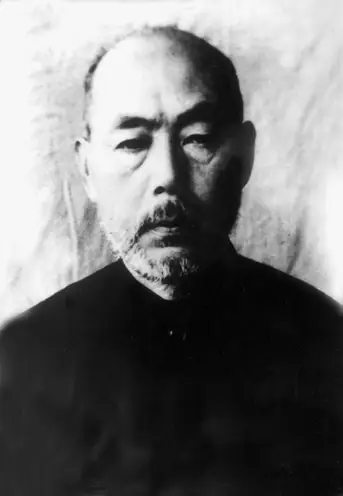
Officier de la Kenpeitai, la Gestapo japonaise, Saitō Yoshio est surtout connu pour avoir été l’un des trois derniers criminels de guerre japonais libérés par la Chine populaire en 1964. Né à Tokyo dans une famille de militaires, il fait ses classes à l’École d’officiers de l’armée de terre (Rikugun shikan gakkō 陸軍士官学校) mais choisit en 1916 de ne pas poursuivre dans l’infanterie pour intégrer la police militaire (Kenpeitai 憲兵隊), une branche de l’Armée impériale chargée initialement de faire appliquer la discipline au sein des troupes, mais dont les compétences en viennent à toucher aussi bien au contre-espionnage qu’à des missions de police politique dans l’archipel comme dans les colonies et les territoires occupés. Après un passage en Corée, Saitō intègre en 1917 l’École de formation de la police militaire (Kenpei renshūjo 憲兵練習所), puis occupe des postes à Tokyo et à Kobe. En 1929, il est nommé à Changchun (Mandchourie), rebaptisée Xinjing après la mise en place du Manzhouguo en 1932. Il accède en mars 1939 à la direction du Bureau de la police de la Kenpeitai au sein de l’Armée du Guandong (Kantō-gun kenpeitai keimubu 関東軍憲兵隊警務部). Durant la décennie qu’il passe en Mandchourie, Saitō commet plusieurs crimes de guerre à en croire ses propres confessions après guerre. Le 8 août 1939 notamment, il livre trente Chinois pour servir de cobayes vivants à l’Unité 731 (Nana-san-ichi Butai 731部隊) dirigée à Harbin par Ishii Shirō 石井四郎 (1892-1959).
En août 1940, Saitō est muté à Canton pour prendre le commandement de la police militaire au sein de l’Armée expéditionnaire de Chine méridionale (Minami Shina haken kenpeitai 南支那派遣憲兵隊). Fort de son expérience dans le Nord, il y réprime la résistance en organisant un maillage serré de postes de contrôle dans la ville et ses alentours. Selon lui, cette répression systématique aurait conduit à environ mille arrestations, dont quarante tués et cent condamnations. Il renforce par ailleurs les mesures de sécurité, alors que les préparatifs en vue de la grande offensive de décembre 1941 font du port de Huangpu en enjeu logistique majeur. La police militaire de Canton espionne en particulier les moyens de communication (courrier, téléphone et télégraphe) pour déjouer les opérations de sabotage. Celles-ci surviennent néanmoins, comme en juin 1941 lorsque les communications entre l’Armée expéditionnaire de Chine méridionale et le Grand QG de Tokyo sont temporairement interrompues à la suite de la destruction de générateurs électriques. Saitō ordonne l’arrestation d’une trentaine de villageois des environs. Il fait, par ailleurs, fusiller dix membres de l’administration locale chinoise soupçonnés de transmettre des renseignements à la résistance. De son propre aveu, ces exécutions sommaires sont une pratique courante durant ses années cantonaises.
Après le déclenchement de la Guerre du Pacifique, Saitō occupe également le poste de commandant des 1 500 soldats de la garnison de Canton (Keibi shiryōkan 警備司令官). Alors que les troupes japonaises s’emparent des concessions occidentales, il préside le Comité de gestion des biens ennemis (Tekisan kanri iinkai 敵産管理委員会). Il se donne alors pour mission de réorganiser la police de Hong Kong en plaçant des agents majoritairement chinois sous l’autorité de l’Armée expéditionnaire de Chine méridionale. Fin janvier 1942, il se rend à Tokyo pour présenter ce plan à sa hiérarchie. De retour à Canton, il découvre qu’un gouvernement militaire échappant à l’autorité de l’Armée expéditionnaire de Chine méridionale a été établi dans la colonie britannique. Fin février 1942, Saitō lance un plan de mise à l’écart des lépreux de Canton afin d’éviter toute contagion parmi les troupes japonaises. Il organise une dizaine d’unités comprenant un médecin militaire et plusieurs aides-soignants et soldats de la police militaire qui sillonnent la ville en camion pour arrêter toute personne suspectée d’être atteinte de la lèpre. Après les avoir parquées de force dans des logements insalubres à l’extérieur de la ville, l’armée japonaise confie leur prise en charge au gouvernement municipal de Canton. Dans ses confessions d’après-guerre, Saitō écrit assumer la responsabilité des traitements inhumains subis par ces personnes. C’est toutefois pour une raison plus anodine que la carrière exemplaire de Saitō connaît alors un accident de parcours. En mai 1942, il profite d’un navire affrété par l’un de ses subalternes pour envoyer au Japon un piano qu’il a acheté à un Britannique après la chute de Hong Kong ainsi que diverses affaires personnelles. À la suite d’une inspection, il est mis en cause par sa hiérarchie qui, à la grande honte de Saitō, ordonne au service juridique de l’Armée expéditionnaire de Chine méridionale de mener une enquête, ce qui le conduit à démissionner. En juin, Saitō rentre au Japon où il est versé dans la réserve. Il reconnaîtra dans son autocritique de 1954 que ce qu’il avait considéré, sur le moment, comme un simple achat personnel était, en réalité, la « spoliation d’un piano du peuple ».
Sa traversée du désert est de courte durée. Dès le 31 août 1942, Saitō bénéficie d’un décret de mobilisation temporaire (rinji shōshū 臨時召集). Il est nommé à Nankin au sein du Bureau des conseillers militaires (junshi guwen bu 軍事顧問部) du gouvernement de Wang Jingwei, signe que ce poste n’est pas très attractif. Placé sous les ordres du conseiller militaire suprême Matsui Takurō, auquel succède Shibayama Kenshirō en mars 1943, Saitō est chargé d’organiser et de former les différentes composantes des forces chinoises du régime de Nankin destinées au maintien de l’ordre. En effet, la baisse progressive des effectifs de l’armée d’occupation fait du maintien de l’ordre un défi croissant. Il s’attelle d’abord à améliorer le fonctionnement des organes de la police qui laisse à désirer, deux ans et demi après l’inauguration du Gouvernement national réorganisé. Saitō s’emploie en priorité à renforcer la chaîne de commandement entre le Bureau de la police du ministère de l’Intérieur (neizhengbu jingchaju 內政部警察局), établi le 25 septembre 1942, et les différents organes locaux. Il poursuit, par ailleurs, la formation d’une police militaire chinoise calquée sur la Kenpeitai débutée quelques mois plus tôt. Afin de former un plus grand nombre de cadres au sein de la police, Saitō réduit la durée du cursus de l’Académie centrale de police (zhongyang jingcha xuexiao 中央警察學校), qui passe de dix-huit à dix mois. Diplômée fin 1942, la première classe, qui compte environ deux cent hommes, forme trois unités respectivement stationnées à Nankin, Suzhou et Shanghai. Ils portent des uniformes identiques à ceux de la Kenpeitai, sinon que les caractères chinois utilisés sont écrits dans une graphie différente.
En octobre 1942, Saitō se voit confier l’organisation de la gendarmerie (bao’andui 保安隊) qui n’est toujours pas achevée. Elle est conçue pour aider l’armée japonaise au maintien de l’ordre au niveau local. Il organise trois garnisons – chacune composée de trois compagnies de 120 hommes –, dont deux à Shanghai et une à Zhenjiang. En avril 1943, il établit trois garnisons de gendarmerie pour un total d’environ 3500 hommes dans la Zone spéciale du Suhuai (Suhuai tebiequ 蘇淮特別區), où la résistance communiste est particulièrement active. Saitō est également amené à superviser la formation au combat des agents de la Brigade fiscale (shuijingtuan 税警團) ; un corps d’élite du ministère des Finances de Zhou Fohai composé d’agents ayant un niveau d’instruction plus élevé que la moyenne des soldats. À cette fin, Saitō fait venir du Manzhouguo plusieurs commandants expérimentés pour servir d’officiers de liaison. La Brigade fiscale est notamment chargée de protéger les salines, qui constituent une ressource fiscale importante pour le régime. En mai 1942, Saitō commande ainsi le déploiement d’une unité de la Brigade fiscale dans les salines proches de Ningbo où elle réprime durant trois mois la résistance antijaponaise. Ces fonctions conduisent naturellement Saitō à s’impliquer dans la campagne de pacification rurale (qingxiang gongzuo 清鄉工作) à Shanghai et dans la région de Canton. Alors que cette politique avait d’abord concerné la Jiangnan après son lancement en juillet 1941, elle est étendue à d’autres régions contrôlées par le gouvernement de Wang Jingwei. En février 1943, Saitō retourne ainsi à Canton afin de superviser l’emploi de la police comme force d’appoint aux opérations militaires dans le cadre de la pacification rurale. Chen Yaozu, gouverneur du Guangdong et beau-frère de Wang Jingwei, tente de retarder le lancement de celle-ci au motif que les soldats et les agents chargés de l’appliquer ne sont pas suffisamment formés. De fait, la campagne de pacification rurale ne débute au Guangdong qu’en avril 1944, sous de mauvais auspices puisque Chen Yaozu est assassiné ce même mois. Les fonctions de conseiller militaire du régime de Nankin amènent enfin Saitō à s’ingérer dans la sphère médiatique et intellectuelle. Entre autres missions, la police chinoise placée de fait sous ses ordres réprime les journaux et autres publications interdites. En 1944, il procède ainsi à l’arrestation des ouvriers d’une imprimerie qui diffusent des tracts pour la fête du 1er-Mai. En novembre 1944, Saitō se rend à Pékin avec pour mission de centraliser la tutelle exercée sur les forces de police et de gendarmerie locales au profit du Bureau central des conseillers militaires. En effet, bien qu’il soit, en principe, placé sous l’autorité de l’Armée expéditionnaire de Chine dont le QG est à Nankin, le Bureau des conseillers militaires de Pékin est totalement autonome dans les faits.
Il semblerait toutefois que cette mission à Pékin ait eu lieu plus tôt car la mobilisation temporaire de Saitō prend fin le 12 juin 1944, comme en atteste une demande d’avancement de grade. Rendu à la vie civile, Saitō trouve un emploi dans une entreprise pharmaceutique. Là encore, cet intermède tokyoïte est de courte durée. En février 1945, il est nommé chef du Bureau d’entraînement de la police militaire en tant que général de brigade de l’Armée du Manzhouguo. Saitō accepte cette position à l’invitation d’Amakasu Masahiko 甘粕正彦 (1891-1945), officier de la Kenpeitai célèbre pour avoir assassiné deux anarchistes au moment du Grand tremblement de terre du Kantō de 1923. Après un séjour en prison, Amakasu avait participé à l’installation de Puyi à la tête du Manzhouguo, avant de prendre la tête de l’Association cinématographique de Mandchourie (Manshū eiga kyōkai 満洲映画協会, ou Man’ei 満映). Arrêté par l’Armée rouge après l’invasion de la Mandchourie lancée le 9 août 1945, Saitō est détenu dans plusieurs prisons soviétiques en Ouzbékistan et à Khabarovsk. En août 1950, il fait partie du millier d’officiers japonais et de quelques dignitaires du Manzhouguo tels que Puyi transférés en Chine, en guise de cadeau de Staline à Mao Zedong.
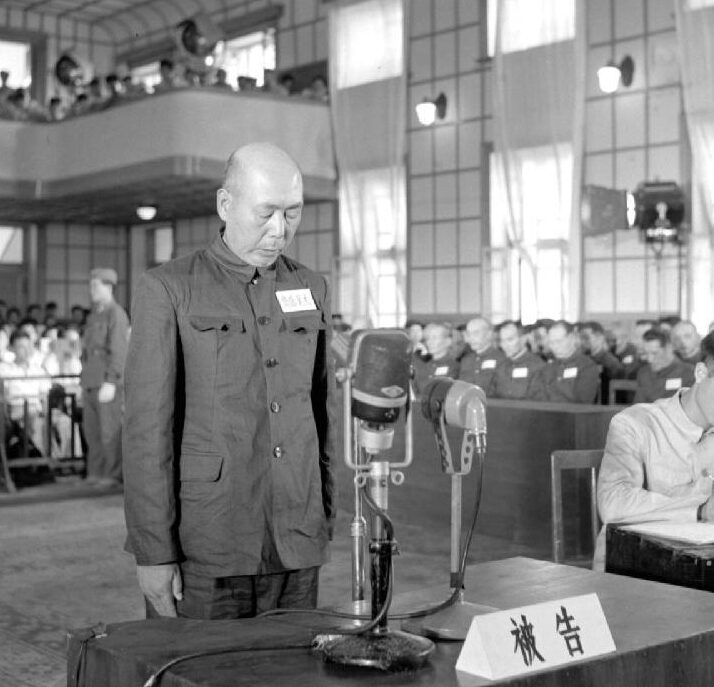
Interné dans le Centre de traitement des criminels de guerre de Fushun (Fushun zhanfan guanlisuo 撫順戰犯管理所), une ancienne prison japonaise réaménagée pour la rendre plus confortable, Saitō et ses codétenus suivent un programme pensé par le PCC pour les amener à reconnaître leurs crimes dans de longues confessions écrites. Ils assistent et participent à de nombreuses pièces de théâtre basées sur ces confessions afin d’encourager un effet de catharsis. Jugé en juin 1956 lors du grand procès de Shenyang, Saitō est condamné le 20 juillet à vingt ans de réclusion, alors que l’essentiel des autres prévenus sont relâchés et rapatriés au Japon. Nombre d’entre eux deviennent des militants pacifistes œuvrant en faveur du rapprochement avec la Chine populaire. En 1964, Saitō bénéficie toutefois d’une libération anticipée dans le contexte de réchauffement des relations entre Pékin et Tokyo en 1963. En avril 1964, il est l’un des trois derniers prisonniers de guerre japonais à rentrer au Japon aux côtés de Tominaga Juntarō 富永順太郎 (1895-?) et de Jōno Hiroshi 城野宏 (1914-1985). Sa fille Maeda Kuniko 前田地子 (1940-) édite ses mémoires publiés en 1997 sous le titre Tobiyuku kumo : saigo no senpan wa kataru 飛びゆく雲 : 最後の戦犯は語る (Nuages évanescents : le dernier prisonnier de guerre se raconte). Déjà connues pour avoir fait l’objet de traductions chinoises partielles, les confessions rédigées à Fushun par Saitō et ses codétenus reviennent au centre de l’attention en 2014 lorsque des extraits sont publiés en ligne, avant que l’intégralité des confessions de 800 détenus japonais soient publiée en 120 volumes l’année suivante pour le 70e anniversaire de la fin de la guerre.
Sources : Zheng Zelong ; NRSJ, p. 421, 423 ; RQGD, p. 163-178 ; JACAR B02032843300, A12090499000 ; WWZQ, p. 840-845 ; MZN, p. 1073 ; Chu Te-lan 2000, p. 637 ; RWQX, p. 999-1000 ; Yomiuri Shinbun 17/08/2019, 23/12/1985 ; AS 07/03/1964 ; Kushner 2014, p. 286 ; Kushner 2024.
An officer of the Kenpeitai, the Japanese equivalent of the Gestapo, Saitō Yoshio is best known as one of the last three Japanese war criminals released by the People’s Republic of China in 1964. Born in Tokyo into a military family, he received his initial training at the Army Academy (Rikugun shikan gakkō 陸軍士官学校), but in 1916 chose not to pursue a career in the infantry and instead entered the military police (Kenpeitai 憲兵隊), a branch of the Imperial Army originally tasked with enforcing discipline within the ranks, but whose remit gradually extended to counter-espionage as well as political policing missions in Japan, the colonies, and occupied territories. After a posting in Korea, Saitō entered the Military Police Training School (Kenpei renshūjo 憲兵練習所) in 1917, and subsequently held positions in Tokyo and Kobe. In 1929, he was appointed to Changchun (Manchuria), renamed Xinjing following the establishment of Manzhouguo in 1932. In March 1939, he assumed leadership of the Police Bureau of the Kenpeitai within the Guandong Army (Kantō-gun kenpeitai keimubu 関東軍憲兵隊警務部). During the decade he spent in Manchuria, Saitō committed several war crimes, according to his own postwar confessions. On 8 August 1939, in particular, he handed over thirty Chinese to serve as live human subjects to Unit 731 (Nana-san-ichi Butai 731部隊), directed in Harbin by Ishii Shirō 石井四郎 (1892–1959).
In August 1940, Saitō was transferred to Canton to assume command of the military police within the South China Expeditionary Army (Minami Shina haken kenpeitai 南支那派遣憲兵隊). Drawing upon his experience in North China, he suppressed resistance by organizing a dense network of checkpoints throughout the city and its surrounding areas. According to his own account, this systematic repression resulted in approximately one thousand arrests, including forty killed and one hundred convictions. He further strengthened security measures as preparations for the major offensive of December 1941 made the port of Huangpu a key logistical hub. The Canton military police closely monitored communications (mail, telephone, and telegraph) in order to thwart acts of sabotage. Such incidents nonetheless occurred, as in June 1941, when communications between the South China Expeditionary Army and the Imperial General Headquarters in Tokyo were temporarily severed following the destruction of electrical generators. Saitō ordered the arrest of some thirty villagers from the surrounding area. He also had ten members of the local Chinese administration executed on suspicion of transmitting intelligence to the resistance. By his own admission, such summary executions were common practice during his years in Canton.
Following the outbreak of the Pacific War, Saitō also held the post of commander of the 1,500 troops of the Canton garrison (Keibi shiryōkan 警備司令官). As Japanese forces seized the Western concessions, he presided over the Committee for the Management of Enemy Property (Tekisan kanri iinkai 敵産管理委員会). He then set himself the task of reorganizing the Hong Kong police by placing predominantly Chinese personnel under the authority of the South China Expeditionary Army. In late January 1942, he traveled to Tokyo to present this plan to his superiors. Upon returning to Canton, he discovered that a military government independent of the South China Expeditionary Army had been established in the British colony. In late February 1942, Saitō initiated a plan to segregate Canton’s lepers in order to prevent contagion among Japanese troops. He organized around ten units composed of a military doctor, several medical orderlies, and military police soldiers who patrolled the city by truck to arrest anyone suspected of suffering from leprosy. After forcibly confining them in unsanitary housing outside the city, the Japanese army entrusted their care to the Canton municipal government. In his postwar confessions, Saitō wrote that he assumed responsibility for the inhumane treatment inflicted upon these individuals. It was, however, for a more trivial reason that Saitō’s otherwise exemplary career suffered a setback. In May 1942, he made use of a vessel chartered by one of his subordinates to ship to Japan a piano he had purchased from a Briton after the fall of Hong Kong, along with various personal belongings. Following an inspection, he was called into question by his superiors who, to his great shame, ordered the legal department of the South China Expeditionary Army to conduct an inquiry, prompting his resignation. In June, Saitō returned to Japan and was placed in the reserve. In his 1954 self-criticism, he acknowledged that what he had regarded at the time as a simple personal purchase had in fact constituted the “spoliation of a piano belonging to the people.”
His period in the wilderness proved short-lived. As early as 31 August 1942, Saitō benefited from a temporary mobilization decree (Rinji shōshū 臨時召集). He was appointed to Nanjing within the Bureau of Military Advisers (Junshi guwen bu 軍事顧問部) of the Wang Jingwei government, an indication that the post was not particularly attractive. Placed under the authority of the supreme military adviser Matsui Takurō, succeeded in March 1943 by Shibayama Kenshirō, Saitō was tasked with organizing and training the various components of the Chinese forces of the Nanjing regime intended for the maintenance of order. As the gradual reduction in occupation troops made internal security an increasingly pressing challenge, he first set about improving the functioning of police organs, which left much to be desired two and a half years after the inauguration of the Reorganized National Government. Saitō prioritized strengthening the chain of command between the Police Bureau of the Ministry of the Interior (Neizhengbu jingchaju 內政部警察局), established on 25 September 1942, and the various local bodies. He also continued the training of a Chinese military police modeled on the Kenpeitai, initiated several months earlier. In order to train a greater number of cadres within the police, Saitō reduced the duration of the curriculum at the Central Police Academy (Zhongyang jingcha xuexiao 中央警察學校) from eighteen to ten months. Graduating in late 1942, the first class, comprising approximately two hundred men, formed three units stationed respectively in Nanjing, Suzhou, and Shanghai. They wore uniforms identical to those of the Kenpeitai, except that the Chinese characters used were written in a different script.
In October 1942, Saitō was entrusted with organizing the gendarmerie (Bao’andui 保安隊), which had yet to be fully established. It was designed to assist the Japanese army in maintaining order at the local level. He organized three garrisons—each composed of three companies of 120 men—two in Shanghai and one in Zhenjiang. In April 1943, he established three garrisons of gendarmerie totaling approximately 3,500 men in the Suhuai Special Zone (Suhuai tebiequ 蘇淮特別區), where Communist resistance was particularly active. Saitō was also called upon to supervise the combat training of agents of the Tax Police Corps (Shuijingtuan 税警團), an elite body within the Ministry of Finance under Zhou Fohai, composed of personnel whose level of education was higher than that of the average soldier. To this end, Saitō brought several experienced commanders from Manzhouguo to serve as liaison officers. The Tax Police Corps was notably responsible for protecting the salt works, which constituted an important fiscal resource for the regime. In May 1942, Saitō ordered the deployment of a unit of the Tax Police Corps to the salt works near Ningbo, where it suppressed anti-Japanese resistance for three months. These functions naturally led Saitō to become involved in the rural pacification campaign (Qingxiang gongzuo 清鄉工作) in Shanghai and in the Canton region. Initially launched in July 1941 in the Jiangnan region, the policy was subsequently extended to other areas controlled by the Wang Jingwei government. In February 1943, Saitō thus returned to Canton to supervise the use of the police as an auxiliary force in military operations within the framework of rural pacification. Chen Yaozu, governor of Guangdong and brother-in-law of Wang Jingwei, attempted to delay its implementation on the grounds that the soldiers and agents tasked with carrying it out were insufficiently trained. Indeed, the rural pacification campaign did not begin in Guangdong until April 1944, under unfavorable circumstances, as Chen Yaozu was assassinated that very month. His duties as a military adviser to the Nanjing regime also led Saitō to interfere in the media and intellectual sphere. Among other responsibilities, the Chinese police de facto placed under his authority suppressed newspapers and other prohibited publications. In 1944, he ordered the arrest of workers at a printing house distributing leaflets for May Day. In November 1944, Saitō traveled to Beijing with the mission of centralizing oversight of local police and gendarmerie forces under the authority of the Central Bureau of Military Advisers. Although in principle subordinate to the China Expeditionary Army, whose headquarters were in Nanjing, the Beijing Bureau of Military Advisers was in practice entirely autonomous.
It would appear, however, that this mission to Beijing took place earlier, as Saitō’s temporary mobilization ended on 12 June 1944, as evidenced by a request for promotion in rank. Returned to civilian life, Saitō found employment in a pharmaceutical company. Once again, this Tokyo interlude proved brief. In February 1945, he was appointed head of the Military Police Training Bureau as a Major general in the Manzhouguo Army. Saitō accepted this position at the invitation of Amakasu Masahiko 甘粕正彦 (1891–1945), a Kenpeitai officer notorious for having murdered two anarchists in the aftermath of the Great Kantō Earthquake of 1923. After serving a prison sentence, Amakasu had participated in installing Puyi as head of Manzhouguo before taking charge of the Manchurian Film Association (Manshū eiga kyōkai 満洲映画協会, or Man’ei 満映). Arrested by the Red Army following the invasion of Manchuria launched on 9 August 1945, Saitō was detained in several Soviet prisons in Uzbekistan and in Khabarovsk. In August 1950, he was among the thousand Japanese officers and several Manzhouguo dignitaries, including Puyi, transferred to China as a “gift” from Stalin to Mao Zedong.
Interned at the Fushun War Criminals Management Centre (Fushun zhanfan guanlisuo 撫順戰犯管理所), a former Japanese prison refurbished to make it more comfortable, Saitō and his fellow detainees followed a program devised by the Chinese Communist Party to lead them to acknowledge their crimes in lengthy written confessions. They attended and participated in numerous theatrical performances based on these confessions in order to foster a cathartic effect. Tried in June 1956 at the Shenyang trial, Saitō was sentenced on 20 July to twenty years’ imprisonment, while most of the other defendants were released and repatriated to Japan. Many subsequently became pacifist activists working toward rapprochement with the PRC. In 1964, however, Saitō benefited from early release in the context of the warming of relations between Beijing and Tokyo in 1963. In April 1964, he was one of the last three Japanese war criminals to return to Japan, alongside Tominaga Juntarō 富永順太郎 (1895–?) and Jōno Hiroshi 城野宏 (1914–1985). His daughter Maeda Kuniko 前田地子 (1940–) edited his memoirs, published in 1997 under the title Tobiyuku kumo: saigo no senpan wa kataru 飛びゆく雲:最後の戦犯は語る (Evanescent Clouds: The Last War Criminal Speaks). Already known through partial Chinese translations, the confessions written at Fushun by Saitō and his fellow detainees returned to public attention in 2014 when excerpts were published online, before the complete confessions of 800 Japanese detainees were issued in 120 volumes the following year to mark the seventieth anniversary of the end of the war.